The Secret to Perfect Scrambled Eggs: Fluffy, Creamy, Every Time
Tired of dry, rubbery breakfasts? Master the art of the perfect scrambled egg with this comprehensive guide. We explore the science of cooking, the best British ingredients, and the famous “low and slow” method that guarantees creamy, fluffy results every single time.
There’s a tragedy playing out in kitchens across Britain every single morning. It happens in student halls, busy family homes, and even in supposedly respectable cafes. It is the tragedy of the rubbery egg.
We’ve all been there. You crack a few eggs into a pan, give them a bash with a fork, turn the heat up high to “get it over with,” and end up with something that resembles a chopped-up bouncy ball. Dry, grainy, weeping a sad puddle of water onto the plate—this is not what breakfast should be.
The humble scrambled egg is deceptively simple. It requires only one main ingredient and a heat source. Yet, it is this simplicity that makes it so difficult to master. There’s nowhere to hide. You can’t mask a bad egg with heavy sauces or spices. It’s a test of technique, patience, and an understanding of how heat changes food. This is why great French chefs were historically tested on their ability to make an omelette or scrambled eggs before getting the job.
But here’s the good news: achieving egg nirvana (that state of creamy, golden, fluffy perfection) isn’t magic, it’s chemistry. And you don’t need a Michelin star or a fancy kitchen in the Cotswolds to do it. You just need to understand the rules.
In this guide, we’re going to strip away the myths, look at the science (without getting too boring), and explore the very best methods to ensure that your next breakfast is nothing short of magnificent. Grab your spatula; we’re going in.
Please note: The content below may contain affiliate links. If you make a purchase through these links, we could earn a commission, at no additional cost to you.
The Great British Breakfast: A Brief History
Before we light the hob, it is worth pausing to appreciate why we care so much. The scrambled egg is a pillar of British culinary life. While the French have their delicate omelettes and the Americans have their diners serving “sunny-side up,” the British have a deep, almost spiritual connection to the scramble.
From the Victorians to the Greasy Spoon
In the Victorian era, breakfast was a grand affair for the wealthy, a buffet of kedgeree, kidneys, and eggs. As the 20th century rolled in and the pace of life quickened, the elaborate buffet shrank, but the egg remained. During the war years and rationing, dried powdered eggs became a grim necessity—a collective national trauma that perhaps explains why, for decades afterwards, we were so grateful for the real thing.
Today, the scrambled egg sits at the heart of the “Full English” (or Scottish/Welsh/Irish) breakfast, acting as the soft, comforting counterpoint to the salty crunch of bacon and the savoury punch of a sausage. It is the first thing many of us learn to cook. It is comfort food for the sick, fuel for the hungover, and a treat for the lazy Sunday.
The Science: Why Do Eggs Turn to Rubber?
To cook the perfect egg, you have to think like an egg.
An egg is mostly water and protein. Imagine the proteins in a raw egg are like tiny balls of wool, all curled up tight and floating in water. When you add heat, these balls of wool start to unravel—this is called denaturing.
As they unravel, they form a mesh, trapping the water inside. This is coagulation. This is what turns the egg from a liquid into a solid.
The Danger Zone
Here is the catch:
- Gentle Heat: The protein mesh forms slowly. It stays loose and flexible, holding onto the water. The result? Soft, creamy, tender eggs.
- High Heat: The proteins panic. They snap together tight and fast, squeezing all the water out like a wringing sponge. The result? Dry, tough curds and a puddle of water on your toast.
The secret to perfection is simply controlling how fast those proteins bond. We want a gentle hug, not a rugby tackle.
Phase 1: The Ingredients (Quality Matters)
You cannot make a silk purse out of a sow’s ear, and you cannot make world-class scrambled eggs out of old, unhappy eggs.
1. The Egg
In the UK, we are lucky to have high standards for egg production. Always look for the British Lion Quality mark (the little red lion stamped on the shell). It guarantees the hens have been vaccinated against salmonella and the eggs are traceable.
- Freshness: Use the freshest eggs you can find. As an egg ages, the proteins degrade, and the white becomes watery. Fresh eggs hold their structure better.
- The Yolk Colour: You might have seen those deep, sunset-orange yolks from brands like Clarence Court. This usually comes from the hen’s diet (often maize or marigold). While colour doesn’t drastically change the flavour, we eat with our eyes. A rich, golden scramble looks far more appetizing than a pale yellow one.
- Free Range: Always opt for free-range or organic if your budget allows. Happy hens that roam outside generally produce tastier eggs.
2. The Fat
Fat is a conductor of heat and a barrier against sticking. It also adds flavour.
- Butter: The gold standard. Unsalted is best so you can control the seasoning yourself, but let’s be honest—salted butter is delicious.
- Oil: Olive oil can work if you are being healthy, but it lacks the creamy mouthfeel of butter.
- Bacon Fat: For a truly decadent, old-school British treat, cooking your eggs in the rendered fat from your bacon is a game-changer.
3. The Liquid Debate: Milk, Cream, or Water?
This is the most argued-over part of the process.
- Milk: The common choice. It adds volume, but the water content in milk can sometimes separate, making the eggs watery.
- Cream (Crème Fraîche/Double Cream): The chef’s choice. High fat prevents the eggs from getting tough. It makes them incredibly rich.
- Water: Surprisingly, some experts swear by a splash of water. The water turns to steam, which puffs up the eggs, making them lighter.
- Nothing: Purists argue that if you cook the egg properly, you don’t need to add anything at all.
The Verdict: For a standard luxury breakfast, a knob of cold butter whisked in at the end is better than adding milk at the start.
4. Seasoning
- Salt: Salt breaks down proteins. If you salt your eggs 15 minutes before cooking, they will actually be more tender and retain moisture better (thanks to science!). If you forget, salt them right at the end.
- Pepper: White pepper is traditional because it doesn’t leave black specks in your yellow masterpiece. However, fresh cracked black pepper tastes much better. It’s your choice—aesthetics or flavour.
Phase 2: The Equipment
Throw away the metal fork and the cast iron skillet. We need precision.
The Pan
You want a non-stick frying pan or a decent saucepan.
- The Saucepan Method: This is famous for the “English” or “Pot” style (popularised recently by Gordon Ramsay). It keeps the eggs deep, allowing them to cook slowly and curdle gently.
- The Frying Pan Method: Better for large, fluffy “diner-style” flakes.
The Tool
Do not use a whisk in the pan (unless you want to ruin your non-stick coating). The best tool is a silicone spatula. It allows you to scrape the bottom and sides cleanly, ensuring no egg gets left behind to burn.
Phase 3: The Three Styles of Scramble
There isn’t just one “perfect” egg. It depends on what you like. Generally, there are three main styles accepted in the culinary world.
Style A: The American Diner (Big & Fluffy)
These are the eggs you get in a hotel buffet or a greasy spoon, but done properly, they are lovely. They are cooked a bit faster, resulting in large, sheet-like curds.
- Texture: Fluffy, distinct pieces, slightly firmer.
- Best for: Putting on toast that has lots of butter, or serving with baked beans.
Style B: The French (Soft & Custardy)
This is the “haute cuisine” method. The eggs are cooked over incredibly low heat (sometimes over a bain-marie—a bowl set over boiling water). They are constantly stirred.
- Texture: Like a thick sauce or a warm custard. No distinct curds.
- Best for: Spreading on sourdough, dipping soldiers into, or serving with smoked salmon.
Style C: The English Pot Method (The Hybrid)
This is the sweet spot for many. It uses a saucepan and mid-to-low heat. It results in soft ripples of egg—creamy but with some texture.
- Texture: Rippled, velvety, moist.
- Best for: The ultimate Sunday breakfast.
The Masterclass: How to Cook the Perfect English Scramble
We are going to focus on Style C, as it offers the best balance of fluffiness and creaminess. Follow these steps exactly.
Serves: 2 people Prep time: 2 minutes Cook time: 5–6 minutes
Ingredients
- 6 large Free-Range British Eggs
- 30g Cold Butter (cubed)
- Salt and Black Pepper
- 1 tbsp Chives (finely chopped) – optional
- 1 tbsp Crème Fraîche – optional (for luxury)
The Method
Step 1: The Crack
Crack your 6 eggs directly into a cold, heavy-based saucepan (not a frying pan). Do not whisk them yet. Do not add salt yet. Add half of your butter cubes.
Step 2: The Heat
Place the pan on a medium heat. Now, start stirring with your silicone spatula. Break the yolks and mix them with the whites and the melting butter.
Step 3: The Dance (The Most Important Part)
This is the secret. You are not just cooking; you are managing the heat.
- Stir continuously. Go round the edges and cut through the middle.
- After about 30 seconds, when the mixture begins to thicken slightly, take the pan OFF the heat. Keep stirring. The residual heat in the pan will keep cooking the eggs.
- After 20 seconds off, put it back ON the heat.
- ON for 30 seconds, OFF for 20 seconds. Repeat this cycle.
Why? This prevents the bottom layer from overcooking and turning into a rubber mat. It ensures the whole mixture cooks evenly.
Step 4: The Transformation
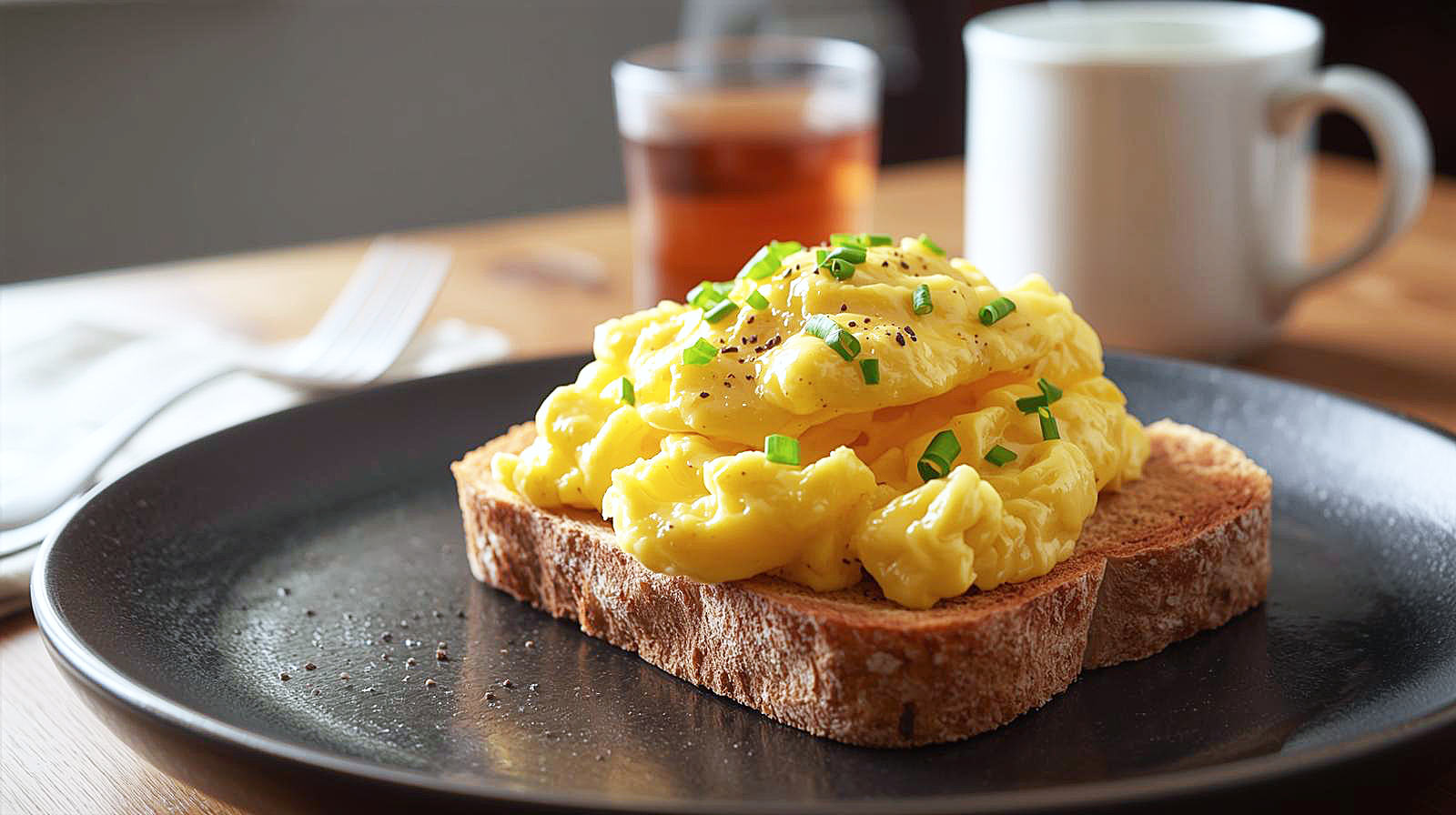
Sudden magic happens. The liquid will transform into a creamy, rippled mass. It should look like soft porridge.
- Crucial Tip: Stop cooking before you think they are done. The residual heat will finish them off on the plate. If they look “done” in the pan, they will be rubbery on the toast.
Step 5: The Finish
Take the pan off the heat permanently. Now, add the rest of your cold butter (and the crème fraîche if you are feeling fancy). Stir it in. The cold fat stops the cooking process and adds a glossy shine.
- Now season with salt and pepper.
- Stir in the chives.
Step 6: The Serve
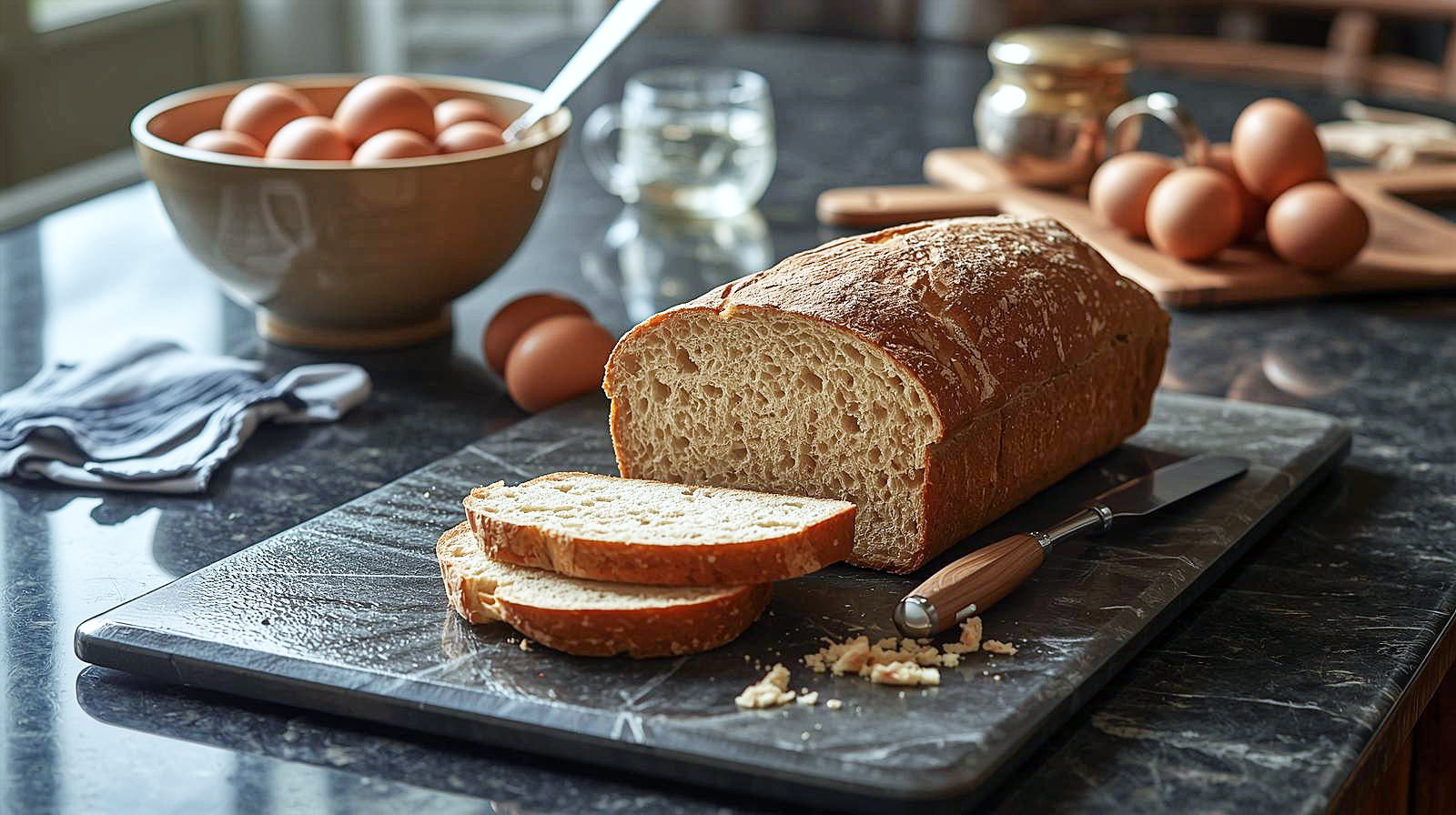
Spoon immediately onto hot, buttered sourdough toast. Do not wait. Scrambled eggs wait for no man.
Troubleshooting: What Went Wrong?
Even the best of us have off days. Here is how to diagnose your egg disasters.
“My eggs are watery.”
The Cause: You overcooked them. The proteins tightened up so much they squeezed the water out (syneresis). The Fix: Next time, use lower heat and take them off the hob sooner. Remember: they continue cooking after you plate them.
“My eggs are grey/green.”
The Cause: This usually happens with hard-boiled eggs, but can happen in scrambles if held at high heat for too long. The iron in the yolk reacts with sulfur in the white. The Fix: Cook fresh and eat immediately. Do not leave them sitting in a warm pan.
“My eggs are dry and rubbery.”
The Cause: High heat and lack of fat. You probably treated them like a stir-fry. The Fix: Use the ON/OFF method described above. Be gentle.
“There are white stringy bits.”
The Cause: You didn’t whisk or mix them thoroughly enough in the pan. The Fix: Ensure you break the yolks early and mix well with the whites as the butter melts.
Taking It to the Next Level: Variations
Once you have mastered the classic, you can start to experiment. Here are three British twists to elevate your brunch game.
1. The Smoked Salmon & Dill
A classic. Stir in ribbons of decent smoked salmon (Scottish is best) right at the end, just as you take the pan off the heat. The residual heat will warm the fish without cooking it. Swap chives for fresh dill. Squeeze a lemon over the top.
2. The Spicy Start
If you had a heavy night at the pub, you might need a kick. Add a pinch of chilli flakes or a swirl of spicy Harissa paste into the butter at the start. Serve on toast rubbed with a cut clove of garlic.
3. The Truffle Hunter
If you want to impress a date. Use truffle oil (sparingly!) or grate fresh truffle over the finished eggs. Because truffle flavour is delicate, do not cook it; add it at the very end.
The Microwave: A Taboo Subject?
We have to address the elephant in the room. Can you microwave scrambled eggs? Most chefs would scream “No!” But sometimes, in an office kitchen or a dorm room, you have no choice.
The Secret to Decent Microwave Eggs:
- Crack 2 eggs into a mug.
- Add a splash of milk and a knob of butter. Whisk like mad.
- Microwave for 30 seconds.
- Take it out and stir. It will look liquid still.
- Microwave for 20 seconds. Stir.
- Microwave for 10 seconds.
- Let it stand for a minute.
It won’t be the creamy masterpiece of the pan method, but it will be edible and fluffy, rather than an exploding yellow rubber brick.
Conclusion: The Joy of Simplicity
There is something meditative about stirring a pot of eggs on a quiet morning. It is a few minutes where you cannot look at your phone, you cannot rush, and you simply have to focus on the food.
When you slide those glossy, golden curds onto a piece of toast, you aren’t just making breakfast. You are participating in a ritual that has sustained Britons for generations.
So, tomorrow morning, don’t just “cook eggs.” Treat them with respect. Keep the heat low, keep the butter cold, and keep stirring. Your taste buds will thank you.
Bon appétit.
Further Reading & Resources
To truly master the art of British cooking and egg science, explore these trusted sources:
- British Lion Eggs: The definitive guide to egg safety, recipes, and the Lion mark standards.
- Serious Eats (The Food Lab): For deep dives into the science of cooking (specifically Kenji López-Alt’s experiments on salting eggs).
- BBC Food: A treasure trove of classic British recipes and technique videos.
- Great British Chefs: Advanced techniques and recipes from the UK’s top culinary minds.
Subscribe for more
Get the latest posts delivered monthly so you never miss an article. Sign up below: