Snickerdoodles: The Ultimate Snickerdoodle Showdown – Chewy, Soft, or Crispy?
Confused by Snickerdoodles? We decode the science, history, and the chewy vs crispy debate of this American classic for the British kitchen.

If there’s one biscuit that’s managed to baffle, delight, and ultimately conquer the British palate in recent years, it is the snickerdoodle. To the uninitiated, it sounds like a made-up word from a Roald Dahl novel or perhaps a particularly erratic doodlebug from the Second World War. But to those in the know, the snickerdoodle is a masterclass in baking chemistry: a deceptively simple sugar cookie rolled in cinnamon that hides a complex secret behind its crinkled, golden exterior.
It is not merely a “cinnamon biscuit.” It is a battleground of texture. In the United States, families have been divided for generations over the correct consistency: should it bend like a chewy caramel, pillow like a soft cake, or snap like a ginger nut?
This guide is your definitive resource. We’ll strip away the American mystery, translate the cups into grams, and explore the science that makes this peculiar “snail noodle” one of the most chemically fascinating treats you can bake in a British kitchen.
Please note: The content below may contain affiliate links. If you make a purchase through these links, we could earn a commission, at no additional cost to you.
The History: From Snail Noodles to New England Whimsy
The origins of the snickerdoodle are as Crumbled and contested as the biscuit itself. While it feels thoroughly American—a staple of New England church fetes and Midwestern cookie jars—its roots are almost certainly European.
The Germanic Connection
Most food historians agree that the name is a corruption of the German word Schneckennudeln, which translates literally to “snail noodles.” This refers to a type of sweet, yeast-leavened roll shaped like a snail shell, popular in the Palatine region. German immigrants arriving in Pennsylvania (the “Pennsylvania Dutch”) likely brought the concept with them, though somewhere along the line, the yeast was swapped for chemical leaveners, and the complex snail shape was simplified into a humble sphere rolled in cinnamon.
The New England Theory
Another school of thought places the biscuit’s birth in 19th-century New England, a region famous for its whimsical approach to naming food. In an era that gave us “grunt,” “slump,” and “buckle” (all fruit desserts), “snickerdoodle” fits right in. It may simply be a nonsense word, a playful portmanteau of “snicker” and “doodle,” designed to make children giggle before they’ve even taken a bite.
Regardless of its lineage, the snickerdoodle solidified its identity in 1891 when Cornelia Campbell Bedford, a New York cooking teacher, published a recipe that cemented the ingredients we know today.
The Holy Trinity: The Science of the Snickerdoodle
You might look at a snickerdoodle recipe and think, “This is just a butter biscuit rolled in cinnamon.” You would be wrong. The snickerdoodle is defined by a specific chemical reaction that gives it its signature tang and cracked surface.
The Secret Agent: Cream of Tartar
If you omit this ingredient, you are not making a snickerdoodle; you are making a sugar cookie wearing a cinnamon disguise.
Cream of tartar (potassium bitartrate) is an acidic byproduct of wine fermentation. In a snickerdoodle, it performs two critical functions:
- The Tang: It provides a distinct, slightly metallic acidity that cuts through the sweetness of the sugar and the richness of the butter. It’s a flavour profile similar to buttermilk or sourdough, but in biscuit form.
- The Crackle: When cream of tartar reacts with bicarbonate of soda (baking soda), it produces carbon dioxide gas. Unlike modern baking powder, which is “double-acting” (reacting once with liquid and again with heat), this mixture is “single-acting.” It reacts immediately and violently. This rapid production of gas causes the dough to puff up quickly in the oven and then collapse just as fast, creating the iconic crinkled, cracked surface.
The Acid Effect
The acidity of cream of tartar also inhibits the formation of gluten. In plain English? It prevents the proteins in your flour from getting too tough. This ensures that even a crispy snickerdoodle retains a tender, melt-in-the-mouth quality that a standard digestive or rich tea biscuit simply cannot match.
The Showdown: Chewy, Soft, or Crispy?
This is where the war is waged. By tweaking the ratios of fat, sugar, and flour, you can engineer the snickerdoodle to your exact specifications. Here is how to manipulate the variables for your perfect biscuit.
Team Chewy: The Modern Favourite
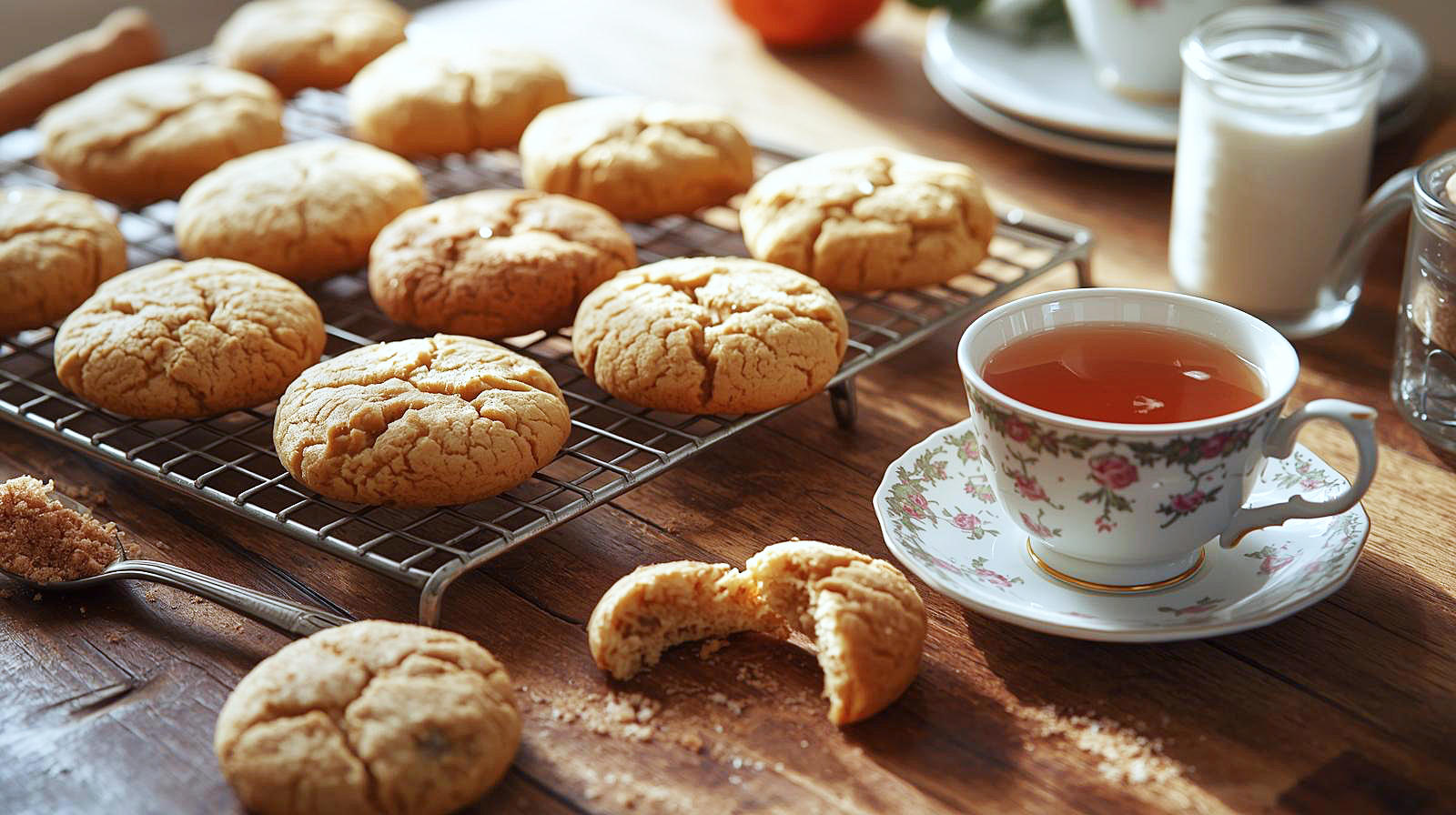
The chewy snickerdoodle is dense, bendy, and slightly under-baked in the centre. It should offer resistance when you bite into it, similar to a high-quality millie’s cookie.
- The Fat: Melted butter. Melting the butter before mixing breaks down the emulsion of fat and water. This makes the dough denser and encourages it to spread, creating a chewier texture.
- The Sugar: High ratio of light brown soft sugar. Brown sugar is hygroscopic (it attracts water). This moisture retention keeps the biscuit from drying out, ensuring that bendy texture.
- The Flour: Bread flour (strong white flour). A controversial but effective trick. The higher protein content develops slightly more gluten, providing the “chew” or structural integrity that prevents the biscuit from just being soft mush.
- The Method: Chill the dough. Resting the dough in the fridge for 30 minutes to an hour solidifies the fat, preventing the biscuit from spreading into a paper-thin puddle.
Team Soft: The Pillowy Cloud
The soft snickerdoodle is almost cake-like. It is tall, domed, and tender. It shouldn’t snap; it should crumble gently.
- The Fat: Shortening or cold butter. Shortening (like Trex or cookeen) has a higher melting point than butter, meaning the cookies spread less and stay taller. If you refuse to use shortening (we are in Britain, after all, where butter is king), use cold butter and cream it with the sugar only briefly.
- The Sugar: Standard white caster sugar. You want to avoid the heavy moisture of brown sugar.
- The Flour: Plain flour or even cake flour (low protein). This ensures minimal gluten development, keeping the crumb delicate and airy.
- The Method: Do not overmix. Treat it like a scone dough. Mix until just combined to keep it fluffy.
Team Crispy: The “Gingernut” Snap
The crispy snickerdoodle is thin, flat, and shatters when dropped. It is excellent for dunking in tea, as it has the structural integrity to survive a submerged brew.
- The Fat: Softened butter, creamed for a long time. Incorporating air helps the initial rise, but you want the butter to melt relatively quickly to flatten the biscuit.
- The Sugar: White granulated sugar. Caster sugar dissolves too easily; granulated sugar leaves small pockets that melt and caramelise, adding snap.
- The Leavening: Reduce the egg. Eggs provide moisture and structure (from the whites). Using just a yolk, or a smaller egg, reduces the liquid content, allowing the biscuit to dry out and crisp up.
- The Method: Low and slow. Bake at a slightly lower temperature (160°C Fan instead of 180°C) for a few minutes longer to dehydrate the biscuit without burning the cinnamon.
The British Kitchen Guide: Translating the Recipe
American recipes are notorious for their “cups” and “sticks.” Precision is key in baking, so we shall stick to grams. Furthermore, we must address the ingredient availability in the UK.
The Flour
American “All-Purpose Flour” is slightly higher in protein than British “Plain Flour,” but for snickerdoodles, Plain Flour is perfect. If you are Team Chewy, you might swap 50% of it for Strong White Bread Flour.
The Sugar
Americans use “Granulated Sugar” for everything. In the UK, we have Caster Sugar, which is finer and dissolves better in the dough.
- For the dough: Use Caster Sugar (or Light Brown Soft Sugar for chewiness).
- For the coating: Use Granulated Sugar. The larger crystals provide a better crunch against the tongue, contrasting with the soft interior.
The Cinnamon
Do not skimp here. Your supermarket “ground cinnamon” is likely Cassia bark, which is fine, but if you can find Ceylon Cinnamon (often labelled “true cinnamon”), it has a floral, citrusy note that pairs beautifully with the tangy cream of tartar.
The Ultimate Master Recipe (The “Chewy-Soft” Hybrid)
This recipe is designed to produce the “Goldilocks” snickerdoodle: crisp edges, a soft border, and a dense, chewy centre.
Prep time: 15 mins (+30 mins chilling) | Bake time: 9–11 mins | Makes: 12–14 large biscuits
Ingredients
The Dry Mix:
- 200g Plain Flour (or 150g Plain + 50g Strong White Bread Flour)
- 1 tsp Cream of Tartar
- ½ tsp Bicarbonate of Soda (NOT Baking Powder)
- ¼ tsp Fine Sea Salt
The Wet Mix:
- 115g Unsalted Butter (Melted and slightly cooled)
- 150g Light Brown Soft Sugar (packed)
- 50g White Caster Sugar
- 1 Large Egg (Room temperature)
- 1 Large Egg Yolk (adds richness and chew)
- 2 tsp Vanilla Extract (high quality)
The “Snicker” Coating:
- 3 tbsp White Granulated Sugar
- 1 tbsp Ground Cinnamon
Method
- The Melt: Melt the butter in a saucepan or microwave. Let it cool until it is no longer hot to the touch (lukewarm is fine).
- The Creaming: In a large bowl, whisk the melted butter with both the brown and caster sugars. You don’t need an electric mixer; a balloon whisk and some elbow grease are fine. Whisk vigorously for 1–2 minutes until the mixture looks smooth and slightly glossy.
- The Emulsion: Add the egg, the extra egg yolk, and the vanilla. Whisk again until combined.
- The Dry: Sift the flour, cream of tartar, bicarbonate of soda, and salt into the wet mixture. Switch to a silicone spatula or wooden spoon. Fold the dry ingredients in until just combined. Do not overwork it, or you will end up with tough biscuits.
- The Chill: The dough will be soft and sticky. Cover the bowl with cling film and refrigerate for 30–45 minutes. This is non-negotiable for the texture.
- The Heat: Preheat your oven to 190°C (170°C Fan / Gas Mark 5). Line two baking trays with baking parchment.
- The Roll: Mix the granulated sugar and cinnamon in a small bowl. Scoop balls of dough (approx. 45g each—about the size of a golf ball). Roll them quickly in your hands to smooth them, then toss them in the cinnamon sugar. Coat them generously.
- The Bake: Place on the trays, leaving at least 5cm of space between them (they will spread). Bake for 9–11 minutes.
- The Visual Cue: They are done when the edges are set and golden, but the centres still look slightly under-baked, puffed, and pale.
- The Fall: Remove from the oven. If they look too puffy, give the baking tray a sharp rap against the counter to deflate them (this enhances the crackles). Let them cool on the tray for 10 minutes—they will firm up as they cool—before moving to a wire rack.
Troubleshooting Your Doodles
Even with the best intentions, things can go awry. Here is how to fix common snickerdoodle disasters.
- The Flat Puddle: Your butter was too hot when you mixed it, or you didn’t chill the dough. If your oven is too cool, the fat melts before the structure sets. Fix: Chill the dough longer and check your oven temperature.
- The Hard Rock: You over-baked them. Snickerdoodles continue to cook on the hot tray after coming out of the oven. Fix: Take them out when they still look “too soft” in the middle.
- The Bland Biscuit: You forgot the salt or used old cream of tartar. Fix: Check the expiry date on your leaveners. Cream of tartar loses potency over time.
- No Crackles: You likely used baking powder instead of the soda/tartar combo, or your oven wasn’t hot enough to trigger the rapid expansion.
Variations for the Adventurous Baker
Once you have mastered the classic, try these twists to keep teatime interesting.
1. The Chai-Doodle
Swap the cinnamon in the coating for a “chai spice” mix: 2 tsp cinnamon, 1 tsp ground ginger, ½ tsp ground cardamom, and a pinch of ground cloves and black pepper. This adds a warming, spicy kick that pairs brilliantly with a milky tea.
2. The Earl Grey Snickerdoodle
A nod to British heritage. Grind 1 tbsp of loose-leaf Earl Grey tea into a fine powder (using a pestle and mortar) and add it to the flour mixture. Add zest of half a lemon to the wet ingredients. The bergamot notes lift the buttery dough wonderfully.
3. The Pumpkin King
Add ½ tsp of “pumpkin pie spice” (mixed spice is a decent British substitute) to the dough and swap the white sugar in the coating for Demerara sugar for an extra autumnal crunch.
Conclusion
The snickerdoodle may have a funny name and a foreign passport, but it deserves a permanent spot in the British biscuit tin. It offers a complexity of texture—that elusive boundary between chewy and soft—that a custard cream or digestive simply cannot compete with.
Whether you join Team Chewy, Team Soft, or Team Crispy, the secret remains the same: respect the cream of tartar, watch your baking time like a hawk, and never, ever skimp on the cinnamon. Now, put the kettle on.
Further Reading
- King Arthur Baking – Cookie Chemistry – An excellent deep dive into the science of baking textures.
- Serious Eats – The Science of Snickerdoodles – A technical look at how temperature and ingredients affect the final cookie.
- BBC Good Food – Snickerdoodles Recipe – A reliable standard for British bakers.
Subscribe for more
Get the latest posts delivered monthly so you never miss an article. Sign up below: