
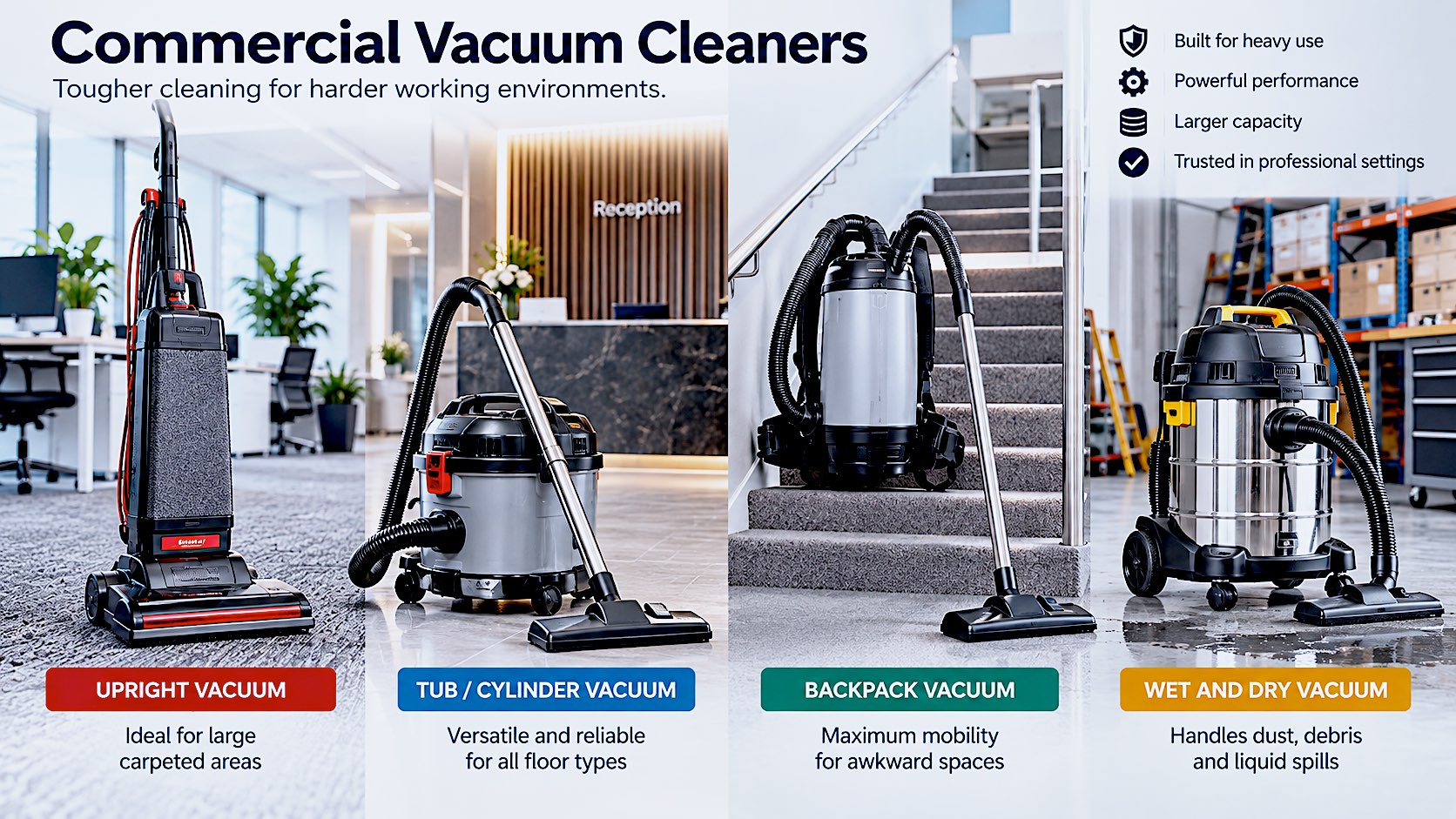
Commercial Vacuum Cleaners
If you’re buying a commercial vacuum cleaner, the wrong place to start is the brand list. The right place is the job.
A commercial vacuum isn’t just a stronger domestic machine. It needs to cope with longer cleaning sessions, heavier use, more varied debris, more demanding environments and higher expectations around durability, filtration and downtime.
For most buyers, the first question isn’t “Which model is best?” but: “What type of cleaning do we need to do, how often, and in what environment?” If you get that right, the shortlist becomes much clearer.
Short answer
For most commercial buyers, the best vacuum cleaner is the one that matches:
Here’s a sensible starting point:
|
Commercial setting |
Best place to start |
|---|---|
|
Offices, schools, corridors |
Upright or tub/cylinder vacuum |
|
Hotels, care homes, quieter environments |
Low-noise cylinder or upright |
|
Mixed flooring sites |
Tub/cylinder vacuum with suitable floor tools |
|
Carpet-heavy commercial interiors |
Upright vacuum |
|
Stair-heavy sites |
Lightweight tub vacuum or backpack vacuum |
|
Daytime cleaning |
Low-noise vacuum, often cordless in some settings |
|
Workshops, garages, messy utility areas |
Wet-and-dry vacuum |
|
Fine dust or sensitive environments |
High-filtration / HEPA-capable machine |
|
Contract cleaning teams |
Durable commercial upright or tub vacuum with good spares support |
|
Large open hard-floor areas |
Vacuum plus other floorcare equipment; do not expect one vacuum to do everything |
That is a much better starting point than chasing the highest motor wattage or the cheapest deal.
What makes a commercial vacuum cleaner good?
A good commercial vacuum needs to do more than pick up dirt.
It must also be able to:
- clean effectively
- survive regular use
- be easy for staff to use
- be quick to maintain
- avoid unnecessary downtime
- deliver reasonable running costs
That is what separates a genuinely suitable commercial machine from a domestic vacuum being pushed beyond its limits.
Cleaning performance matters, but so does productivity
A commercial vacuum is part cleaning tool, part labour-efficiency tool. If it cleans well but is awkward, heavy, slow to empty or constantly blocked, it costs you time every single day.
In commercial settings, useful performance is a combination of:
- floorhead design
- airflow and suction
- filtration
- debris capacity
- manoeuvrability
- cable length or battery practicality
- ease of maintenance
- durability under repeated use
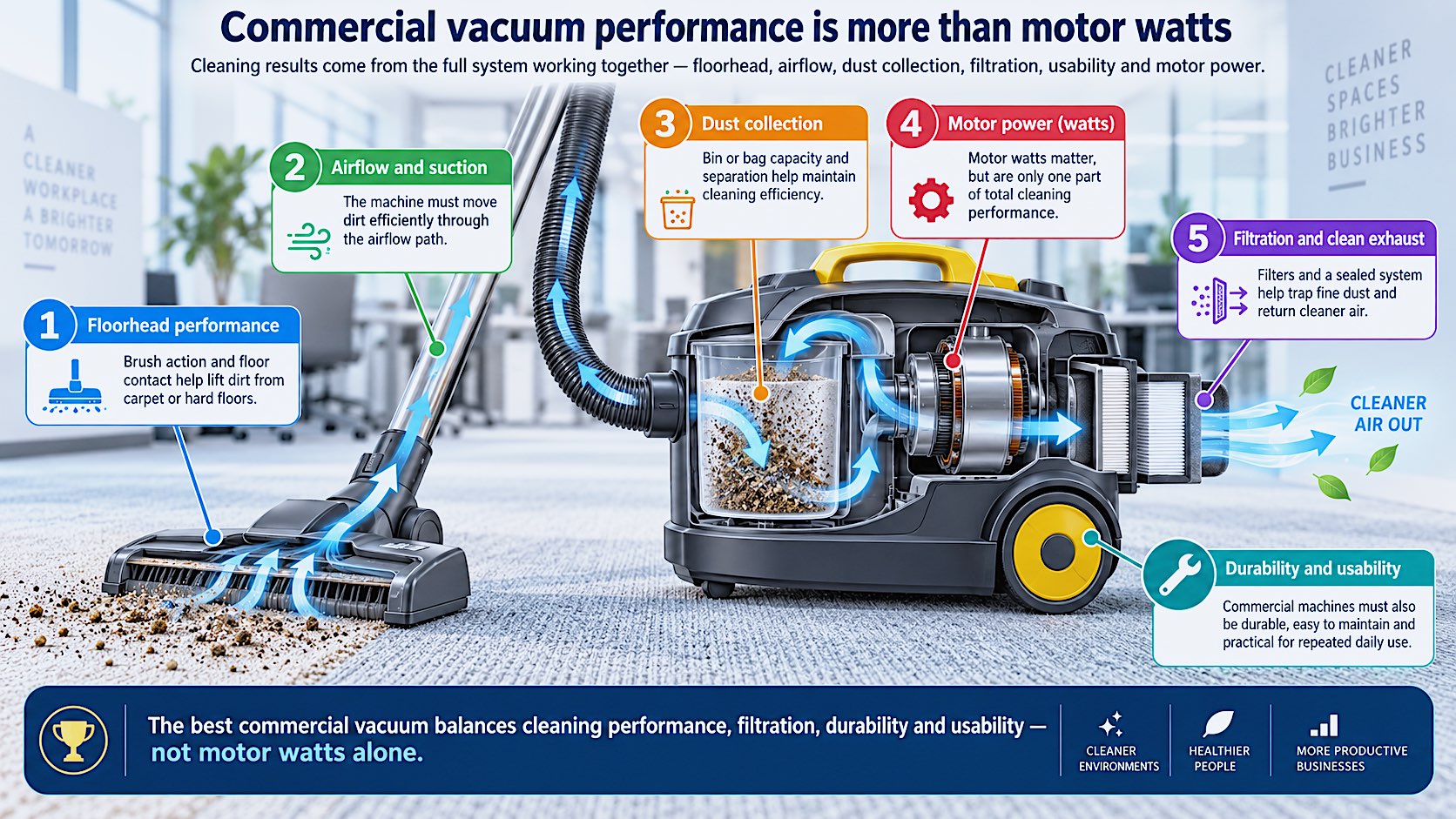
Motor wattage is only one part of the picture.
The main types of commercial vacuum cleaner
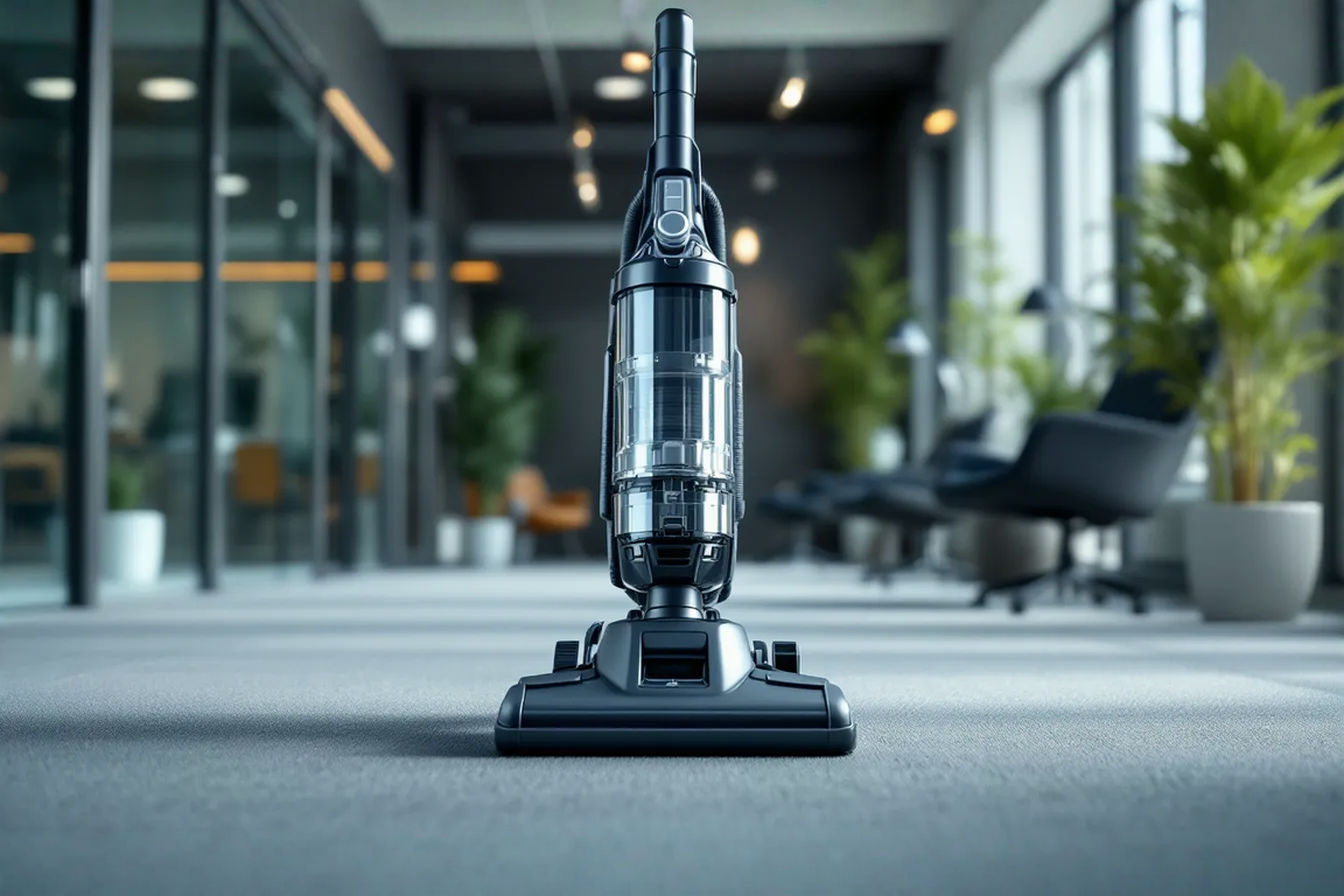
Upright commercial vacuums
Uprights remain a strong option where large carpeted areas need routine cleaning.
Best for
Advantages
Drawbacks
If most of your work is open carpeted space, an upright is often the most productive choice.
Tub or cylinder commercial vacuums
These are often the most flexible all-rounders in commercial cleaning.

Best for
Advantages
Drawbacks
For many contract cleaners, a good commercial tub vacuum is the safe, dependable middle ground.
Backpack vacuums
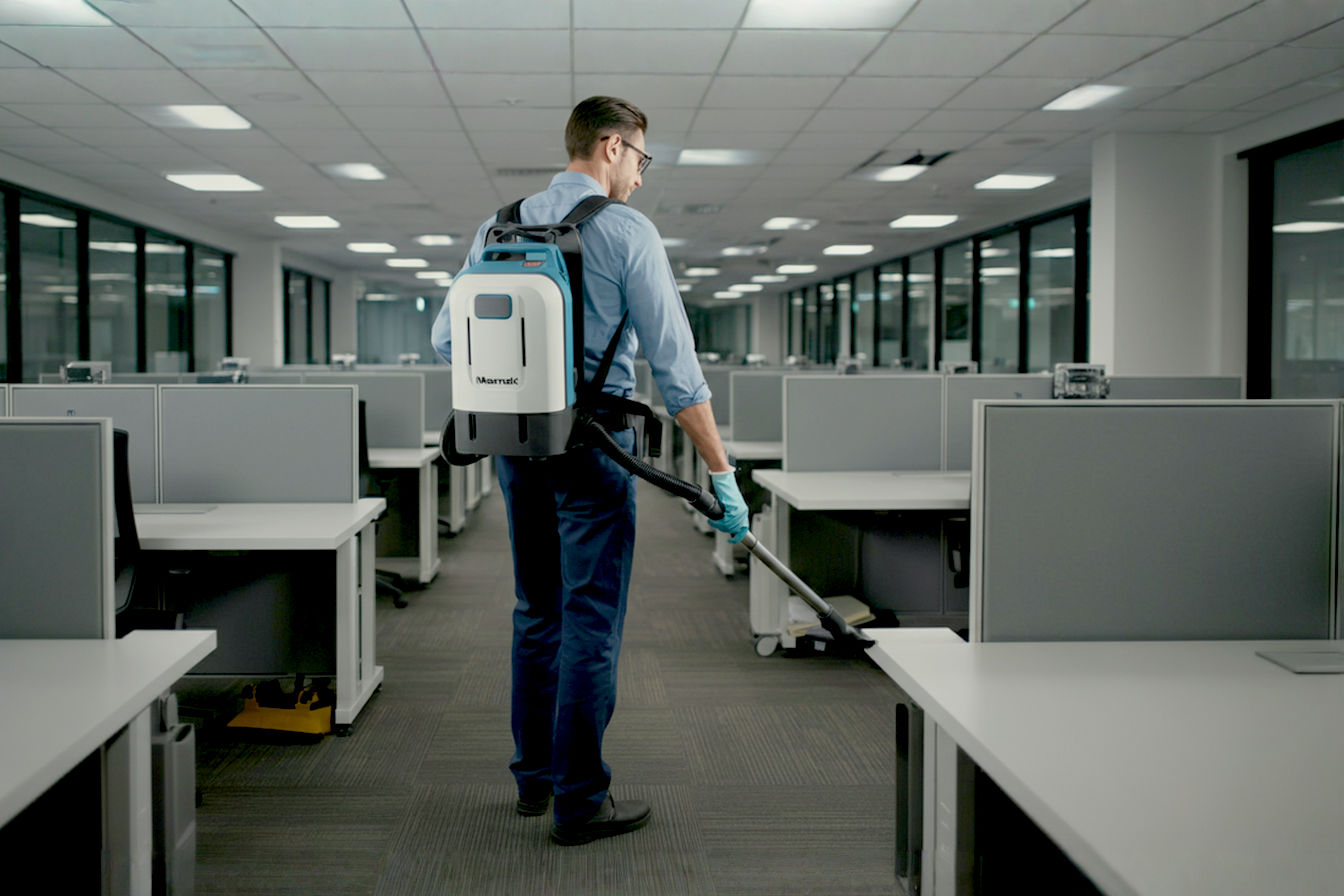
Backpack vacuums are designed for mobility and productivity, especially in awkward spaces.
Best for
Advantages
Drawbacks
Backpack vacuums can be very effective, but only if the cleaning team is comfortable using them.
Wet-and-dry vacuums
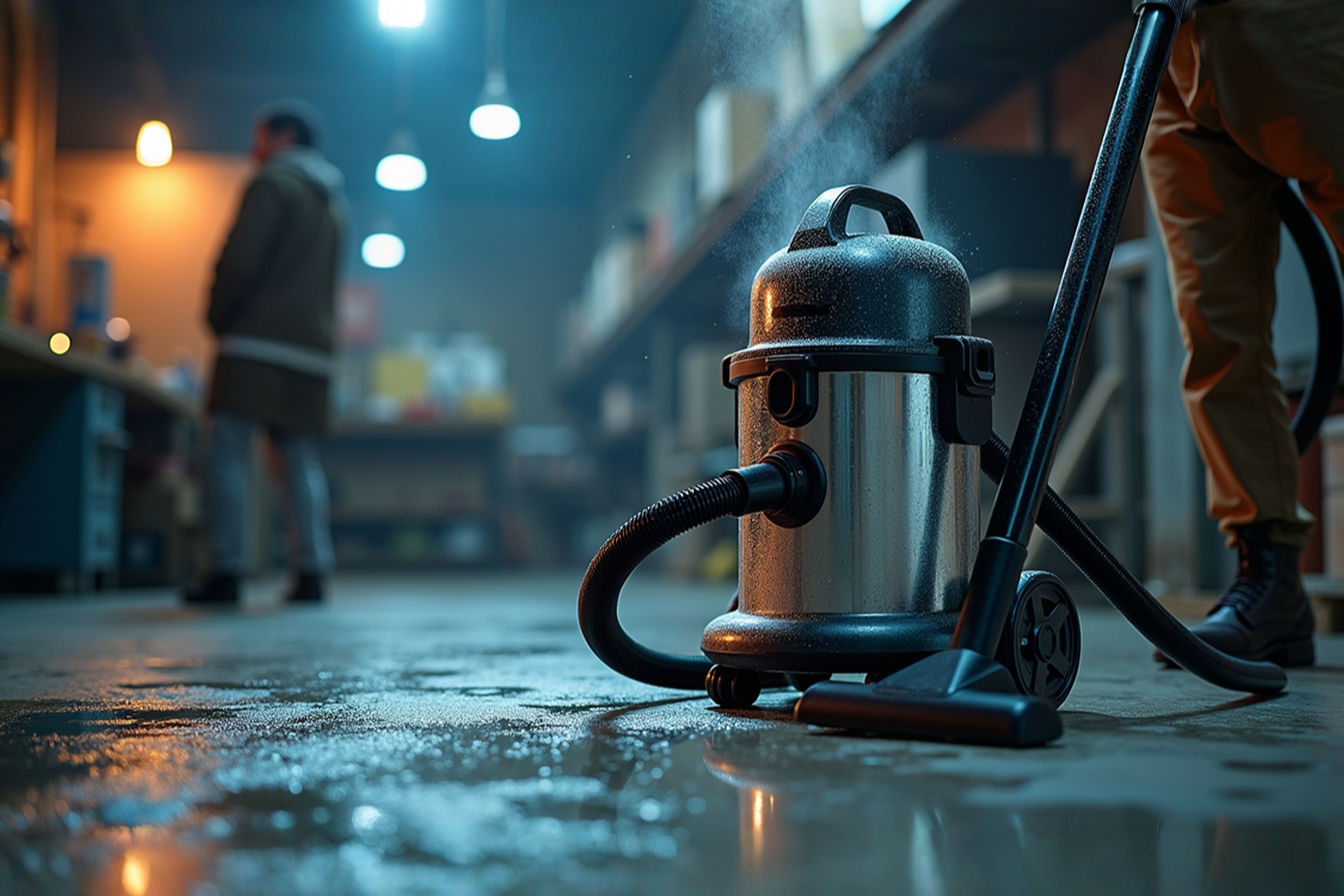
A proper commercial wet-and-dry vacuum is designed to collect both dry debris and liquids.
Best for
Advantages
Drawbacks
A common mistake is trying to use a wet-and-dry vacuum as a general daily office vacuum. It can do the job, but often badly and inefficiently.
Cordless commercial vacuums
Cordless machines have become more relevant in commercial cleaning, especially where trip hazards, speed and daytime cleaning matter.

Best for
Advantages
Drawbacks
Cordless works well when the workflow supports it. It works badly when the team is constantly waiting for batteries or running out mid-job.
How to choose the right commercial vacuum cleaner
1. Start with the site, not the specification sheet
Ask:
- Is this mainly carpet, hard floor or mixed?
- Are there lots of stairs?
- Is the area cluttered or open?
- Is cleaning done during occupied hours?
- Is noise a concern?
- Are there spill risks?
- Is dust control especially important?
A school, a hotel, a dental practice and a joinery workshop may all need “a vacuum cleaner”, but not remotely the same one.
2. Think about duty cycle
Commercial machines need to cope with repeated use.
A domestic-style vacuum may be perfectly fine for a small office cleaned lightly once in a while. It is a poor choice for:
- daily contract cleaning
- multiple operators
- long cleaning sessions
- heavy debris
- demanding commercial wear
If the machine is going to be used hard, focus on:
- build quality
- ease of repair
- spare parts availability
- warranty support
- track record in commercial environments
3. Match the vacuum to the flooring
Carpet-heavy sites
Prioritise:
- effective brush agitation
- strong carpet pickup
- decent cleaning width
- manageable weight
This usually points towards a commercial upright.
Hard-floor-heavy sites
Prioritise:
- suitable hard-floor tool
- edge pickup
- non-marking movement
- good manoeuvrability
This often points towards a tub/cylinder machine, though in some settings other floorcare equipment may be more appropriate.
Mixed flooring
Look for:
- easy floorhead changes
- adjustable settings
- multi-surface capability
- sensible operator workflow
A machine that is excellent on one surface but annoying on the other can slow the whole job down.
4. Consider operator comfort
Commercial cleaning is repetitive work.
Things that matter more than buyers often expect:
- machine weight
- balance
- handle comfort
- wheel quality
- hose reach
- cable length
- ease of carrying
- storage on the trolley or in the van
- how awkward it is on stairs
A slightly less glamorous machine that staff are happy to use every day is often the better purchase.
5. Pay attention to filtration
Filtration matters more in some environments than others.
It is especially relevant in:
- healthcare-adjacent settings
- allergy-sensitive sites
- fine-dust environments
- hospitality
- enclosed indoor spaces
Look beyond the word “HEPA” on the box.
Also ask:
- Is the machine properly sealed?
- How often do filters need replacing?
- How easy is it to change them?
- What do replacements cost?
Good filtration is not just an air-quality issue. It also affects how well the machine maintains performance.
6. Do not ignore capacity
Small bins or bags slow work down.
If the team is emptying the vacuum constantly, productivity drops.
Capacity matters particularly in:
- large sites
- dusty sites
- high-footfall spaces
- contract cleaning rounds
- carpet-heavy areas
- jobs involving larger debris
That said, bigger is not always better if it makes the machine heavy and awkward.
7. Check cable or battery practicality
For corded machines, check:
- cable length
- plug storage
- strain relief
- how safely the cable can be managed
- whether staff will constantly need to change sockets
For cordless machines, check:
- real runtime
- charge time
- spare battery cost
- whether batteries are interchangeable across your equipment
- whether the team can realistically keep them charged
Cordless convenience only works when battery management is organised.
Features worth paying for
Worth paying attention to
- good cleaning performance on your floor type
- durable commercial build
- long, practical cable or realistic battery system
- easy brush-roll access
- simple filter access
- decent capacity
- low-noise operation where needed
- robust hose and wand construction
- spare parts availability
- manufacturer or dealer support
- sensible warranty
Useful in the right setting
- HEPA or higher-grade filtration
- onboard tool storage
- anti-tangle brush design
- quick-change floor tools
- backpack harness comfort features
- replaceable batteries
- docking or charging systems
Less important than the sales literature suggests
- headline motor wattage on its own
- too many accessories
- flashy controls
- excessive claims about “maximum power”
- features that add complexity without improving daily cleaning
Common buying mistakes
1. Buying a domestic vacuum for full commercial duty
It may save money upfront and cost more later in breakdowns, downtime and replacement.
2. Choosing solely on price
The cheapest machine is rarely the cheapest to own.
3. Ignoring consumables and spares
Before buying, check the cost and availability of:
- bags
- filters
- brush rolls
- batteries
- hoses
- wands
- belts
- chargers
4. Buying too small for the site
Tiny capacity and short runtime quickly become frustrating.
5. Choosing the wrong format for the environment
A bulky wet-and-dry machine in a polished office, or a heavy upright in a stair-heavy site, is a poor fit.
6. Forgetting noise
If the vacuum is used during working hours, in hospitality, education or care settings, noise may matter almost as much as cleaning performance.
7. Forgetting who will maintain it
A machine that is awkward to unclog, empty or clean is a machine that will be neglected.
Price guide: what should you expect?
Commercial vacuum pricing varies widely depending on the type and duty level, so treat the following as a rough buying framework rather than a fixed market guide.
|
Budget |
What you are usually looking at |
|---|---|
|
Under £150 |
Entry-level light commercial or heavier-duty domestic crossover machines |
|
£150–£300 |
Many mainstream commercial uprights and tub vacuums |
|
£300–£600 |
Better commercial builds, specialist formats, stronger filtration, more refined designs |
|
£600+ |
Premium commercial systems, advanced cordless kits, specialist machines |
Higher price may buy:
- better durability
- quieter operation
- better ergonomics
- stronger support
- improved filtration
- better battery systems
- longer service life
It does not automatically guarantee better cleaning for your site.
Basic maintenance that keeps a commercial vacuum working
Commercial vacuums live or die on maintenance.
Loss of suction or poor pickup is often caused by simple issues:
- full bag or bin
- blocked hose
- clogged filter
- tangled brush roll
- split hose
- worn floor tool
- neglected battery or damaged cable
Daily or frequent checks
- empty the bag or bin before overfilling
- inspect the brush area for hair and debris
- check for blockages
- check cable condition or battery condition
- wipe the machine down if it is used in dusty or customer-facing environments
Weekly or scheduled checks
- inspect or clean filters as the manual recommends
- check hoses and wands for cracks or splits
- inspect wheels, latches and attachments
- check for wear on brush strips or rollers
- inspect chargers and battery contacts on cordless systems
Wet-and-dry machines need extra care
After wet pickup:
- empty dirty water promptly
- rinse the tank
- dry the relevant parts properly
- check seals
Failing to do that leads quickly to odours, hygiene issues and premature wear.
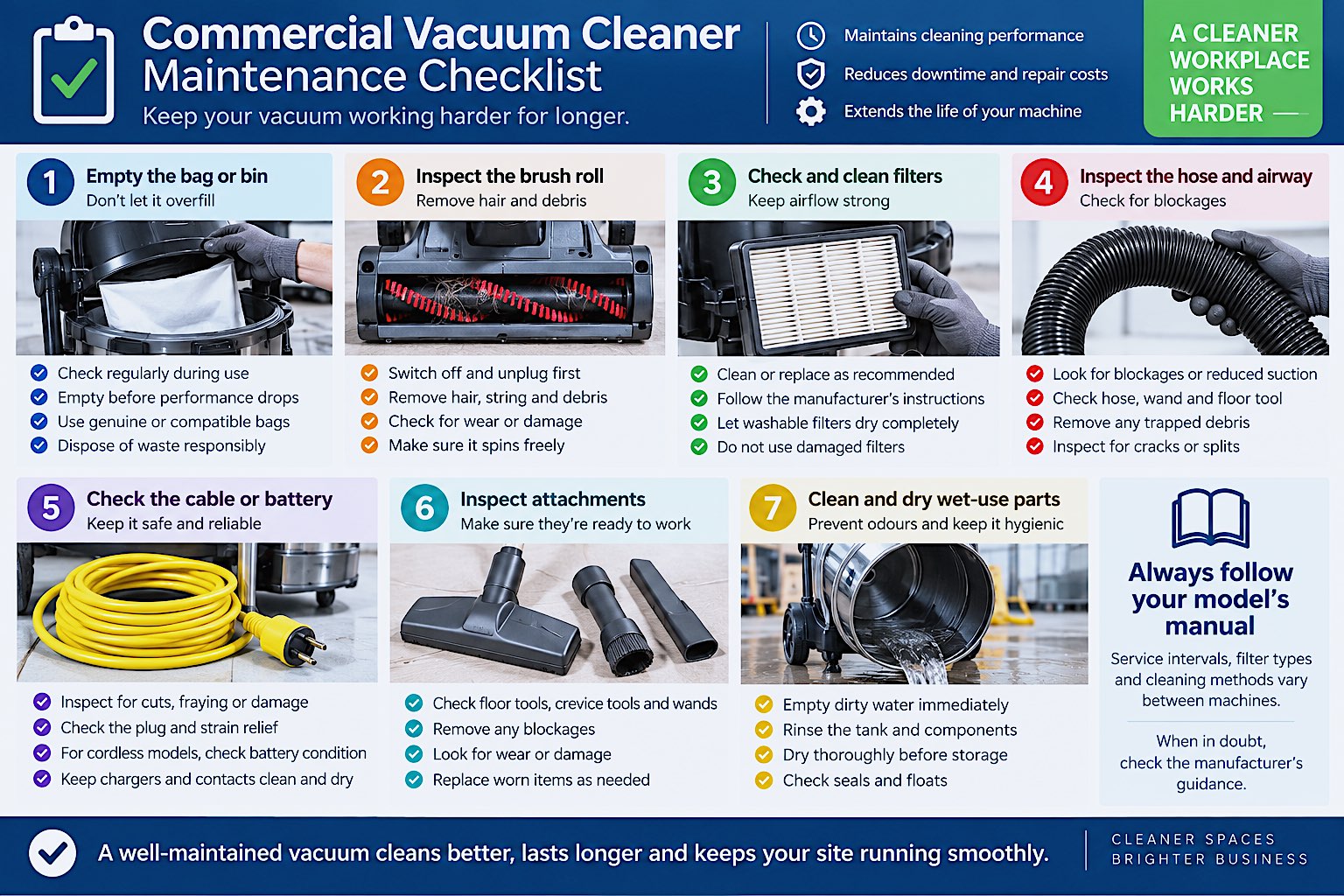
Simple maintenance checklist
A good commercial vacuum maintenance routine should cover:
- empty bag/bin
- inspect brush roll
- check filter
- inspect hose/airway
- inspect cable/battery
- clean and dry wet-use parts
- follow the model manual
That is the same logic that works well for domestic machines, but it matters even more in commercial use because downtime costs money.
Safety and practical warnings
Commercial buyers should not treat all debris as ordinary vacuum waste.
Unless the machine is designed and rated for the task, avoid vacuuming:
- liquids with a dry-only machine
- hot ash
- hazardous dust
- sharp debris
- flammable materials
- fine construction dust beyond the machine’s intended use
Also check workplace requirements around:
- cable management
- PAT testing or appliance checks where relevant
- battery charging routines
- noise during occupied hours
- hygiene requirements in sensitive environments
If your site involves specialist hazards, buy for that hazard specifically rather than assuming a general-purpose vacuum will cope.
What type of commercial vacuum should you shortlist?
If you are at step one, use this filter:
Carpet-heavy commercial interiors: start with uprights.
Mixed flooring and general contract cleaning: start with tub/cylinder vacuums.
Stair-heavy or obstacle-heavy spaces: consider backpack vacuums.
Spill-prone utility or workshop spaces: consider wet-and-dry vacuums.
Daytime cleaning or cable-sensitive areas: consider cordless commercial vacuums.
Sensitive indoor environments: pay close attention to filtration and sealing.
The best next step is simple:
Write down:
- your site type
- flooring mix
- cleaning frequency
- debris type
- whether noise matters
- whether filtration matters
- whether portability or runtime matters more
Once you have that, you can rule out a large part of the market and make a much more confident buying decision.