How to Choose the Right Raised Bed for Your Garden
Choosing the right raised bed isn’t about buying the biggest or most attractive kit—it’s about matching the bed to your garden, your crops and how you’ll actually use it. Learn how to size a raised bed correctly, calculate soil volume, compare materials, and avoid expensive mistakes before you buy.
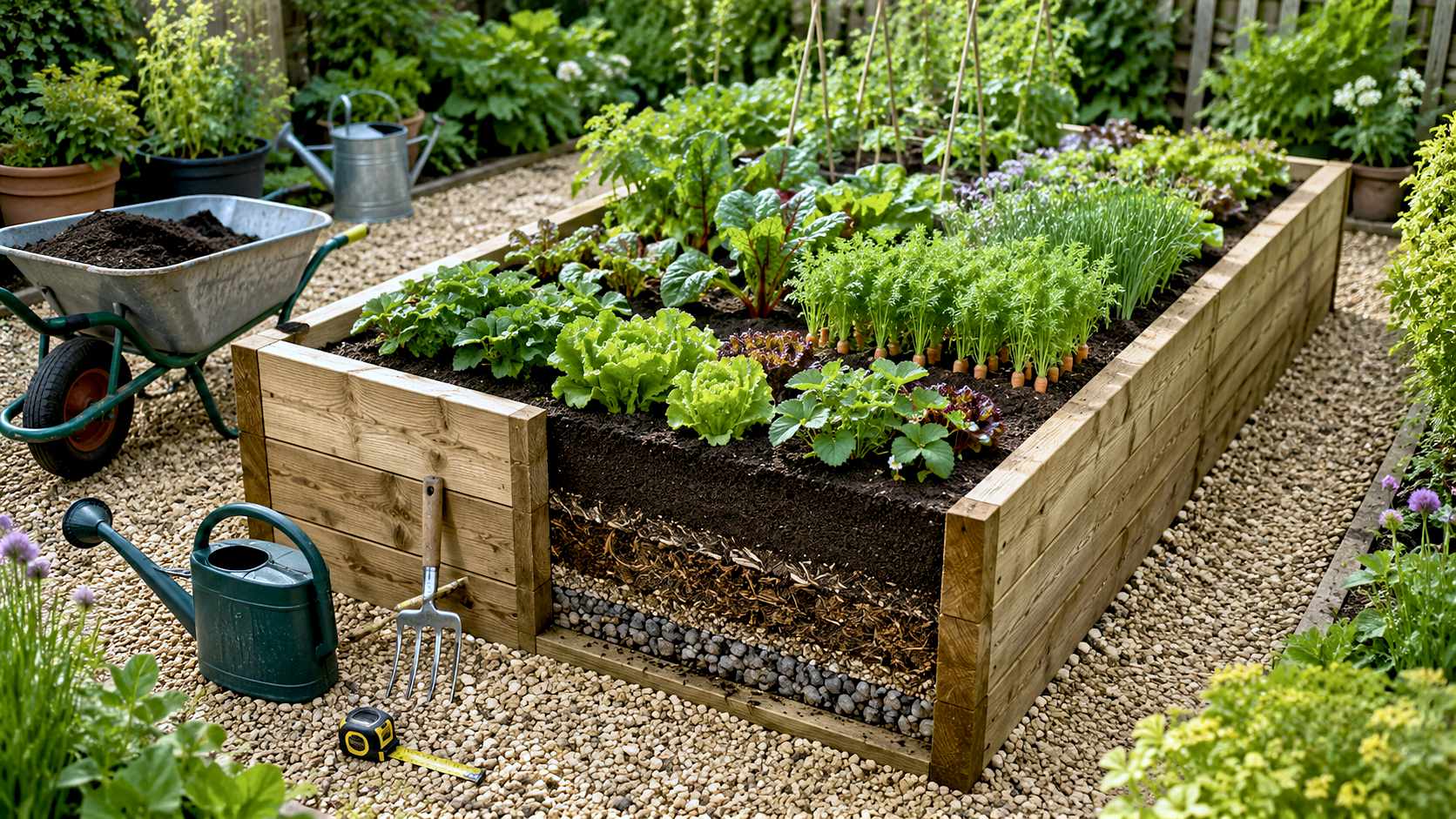
Choose a raised bed by working from the plants, the gardener and the site – not from a kit photograph. Measure how far you can comfortably reach, decide the soil depth the crops need and calculate the fill volume before comparing frame prices. The soil can cost more than the edging, and a tall bed can create more watering and access work than it removes.
A raised bed is useful when you need improved drainage, a controlled soil mix, a defined no-dig area or a more comfortable working height. It is not essential for productive growing, and it will not compensate for deep shade, poor access to water or a design that cannot be reached without standing on the soil.
Please note: The content below may contain affiliate links. If you make a purchase through these links, we could earn a commission, at no additional cost to you.
First decide whether raising the soil solves the problem
- Poor or compacted ground: a raised bed can provide a new root zone while the soil below gradually improves.
- Waterlogged soil: extra height can help, but water still needs somewhere to drain; a sealed wet base remains a problem.
- Limited mobility: the right height and edge can reduce bending, but path width, turning space and knee clearance matter too.
- Paved garden: a deep, drained bed can create growing space, although it behaves more like a very large container.
- Neat crop rotation or protection: a defined bed is easier to cover, divide and keep free from foot traffic.
Size the bed to your reach
RHS guidance suggests keeping a bed below about 1.5 m wide when it can be worked from both sides. That is an upper guide, not a target. Mark the proposed edges and reach towards the centre without leaning, twisting or stepping in. If the bed is against a wall or fence and accessible from one side, it should be much narrower.
Long beds can make routes awkward. Two shorter beds with a crossing path may be easier than one continuous run. Leave at least enough space for your wheelbarrow, kneeling position and watering equipment. RHS guidance gives about 45 cm for a wheelbarrow path and about 1 m where wheelchair access is needed, but the individual chair, turning circle and working position should be tested.
Match soil depth to what you will grow
| Planned use | Useful starting depth | What to check |
| Salad leaves, strawberries and dwarf bulbs | About 30 cm | Root room, rapid drying and seasonal replanting |
| Most annual vegetables and cut flowers | 30-45 cm | Crop root depth and quality of the soil below |
| Root crops | Deep enough for the chosen variety | Stone-free growing medium and straight usable depth |
| Fruit bushes and shrubs | At least about 45 cm, often more | Mature root system, permanent soil volume and watering |
| Accessible standing or seated gardening | Set by the user, not the crop alone | Reach, edge comfort, knee space and total fill volume |
A shallow frame open to healthy garden soil gives roots access below. The same frame on concrete gives only the filled depth, so it may need to be deeper. Do not fill an unnecessarily tall bed entirely with premium compost; specify the root zone and use suitable, stable fill rather than material that will rapidly rot down and slump.
Calculate the hidden soil order
Use the internal dimensions, not the outside of the frame. Soil volume in litres equals internal length in metres multiplied by internal width multiplied by fill depth, then multiplied by 1,000.
Worked example: A bed with internal dimensions of 2 m by 1 m filled to 0.35 m needs 2 x 1 x 0.35 x 1,000 = 700 litres before allowing for settlement. That is seventy 10-litre bags, so compare a bulk delivery and check access before buying the frame.
Measure bag volume rather than bag count, and ask a bulk supplier how the material is sold. Topsoil provides mineral structure and does not collapse as quickly as pure organic matter; well-rotted compost improves it. Match the mix to the crops and source reputable material. RHS advises that good-quality bought topsoil should meet the relevant British Standard stated by the supplier.
Compare frame materials
| Material | Advantages | Trade-offs |
| Pressure-treated softwood | Adaptable, widely available and economical | Finite life; treatment, lining and cut-end care need checking |
| Untreated durable timber | Natural appearance and easier end-of-life separation | Higher cost or shorter life depending on species and exposure |
| Brick or stone | Long-lived, stable and good for permanent designs | Footings, skilled work, cost and hard edges |
| Galvanised or coated metal | Thin walls preserve internal width and kits assemble quickly | Heat, sharp edges, coating damage and replacement-panel availability |
| Recycled plastic or composite | Rot-resistant and low routine finishing | Higher purchase cost, movement, repairability and material provenance |
For timber, ask what treatment was used and whether the product is intended for raised beds and edible growing. Do not reuse old creosote-treated railway sleepers where people will have frequent skin contact or where they form a food-growing container. If responsible sourcing matters, look for a valid FSC label or documented claim.
Design the base and drainage for the surface
On open soil
Remove persistent weeds and loosen compacted ground so water and roots can move between the bed and the soil below. A fine mesh can deter burrowing pests where they are a known problem, but avoid an impermeable sheet that creates a perched pool of water.
On paving or concrete
Provide generous drainage openings and protect them from clogging. Direct runoff somewhere safe rather than towards the house, neighbour or an icy path. The RHS notes that beds on a hard surface need a freer-draining mix and regular soil renewal, much like large containers.
Plan for water and maintenance
Raised beds often dry faster than ground-level soil. Put the bed within reach of a water source, mulch after planting and check moisture below the surface rather than watering by calendar. A tall narrow bed exposed to wind can dry especially quickly. Drip or seep irrigation may help, but it still needs inspection and winter care.
Check how corners are joined, whether long sides are braced and whether individual boards or panels can be replaced. Soil pressure pushes outward, and wet soil is heavy. A cheap frame that bows in its first season is not good value.
Price the complete bed
- Frame, fixings, corner posts, bracing and any safe lining.
- Base preparation, drainage materials and paths.
- Topsoil, compost, delivery charge and access for bulk bags or barrows.
- Water connection, hose or irrigation, mulch and crop supports.
- Replacement parts, preservative or coating, and future soil top-ups.
Before ordering, mark the footprint, test your reach, calculate litres and trace where excess water will go. Those four checks will eliminate most unsuitable raised beds faster than comparing dozens of products.
External reference links
- Royal Horticultural Society: How to make a raised bed
- Royal Horticultural Society: Growing vegetables in raised beds
- Royal Horticultural Society: Buying topsoil
- Forest Stewardship Council UK: Choosing certified products
- GOV.UK: UK REACH creosote context
Subscribe for more
Get the latest posts delivered monthly so you never miss an article. Sign up below: