
The Ultimate British Guide to Pergolas: Design, Planning & Inspiration
Looking to upgrade your garden? Discover our complete UK guide to pergolas. From wooden kits and planning laws to bioclimatic roofs and climbing plants.
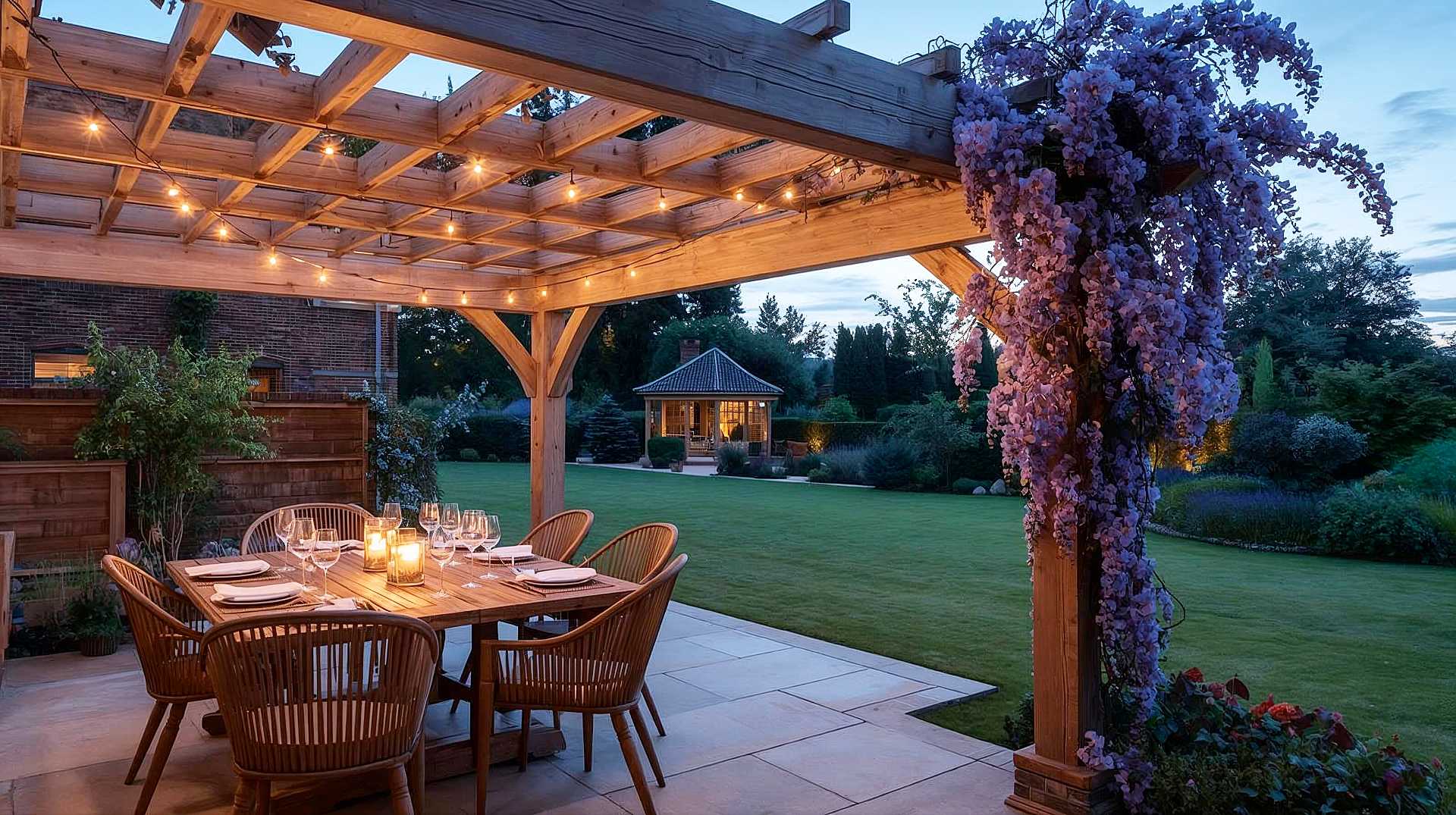
We all know the scenario. It’s a Bank Holiday weekend, the barbecue’s sizzling, and the Pimms is poured. Then, right on cue, the grey clouds roll over, and the first spots of rain send everyone scrambling for the back door. It’s the classic British summer story: optimism defeated by meteorology.
But what if you didn’t have to run inside? What if you had a space that offered the breeze of the garden with the security of a living room?
Enter the pergola. Once seen as just a decorative archway for roses in grand country estates, the pergola has evolved. Today, it’s the unsung hero of the modern British garden: The bridge between your indoors and your outdoors, creating a distinctive “zone” that feels like a sanctuary. Whether on a sprawling lawn in the Cotswolds, a windy coastal plot in Cornwall, or a compact Victorian terrace in London, a pergola adds structure, shade, and a touch of architectural magic to your outdoor space.
In this guide, we’re going to break down everything you need to know. We’ll look at materials that can withstand our damp winters, navigate the often-confusing world of planning permission, and help you find a style that fits your wallet.
Please note: The content below may contain affiliate links. If you make a purchase through these links, we could earn a commission, at no additional cost to you.
What Actually Is a Pergola? (And What It Isn’t)
Before we start digging holes for posts, let’s clear up the terminology. Garden structure names are often used interchangeably, but there are distinct differences.
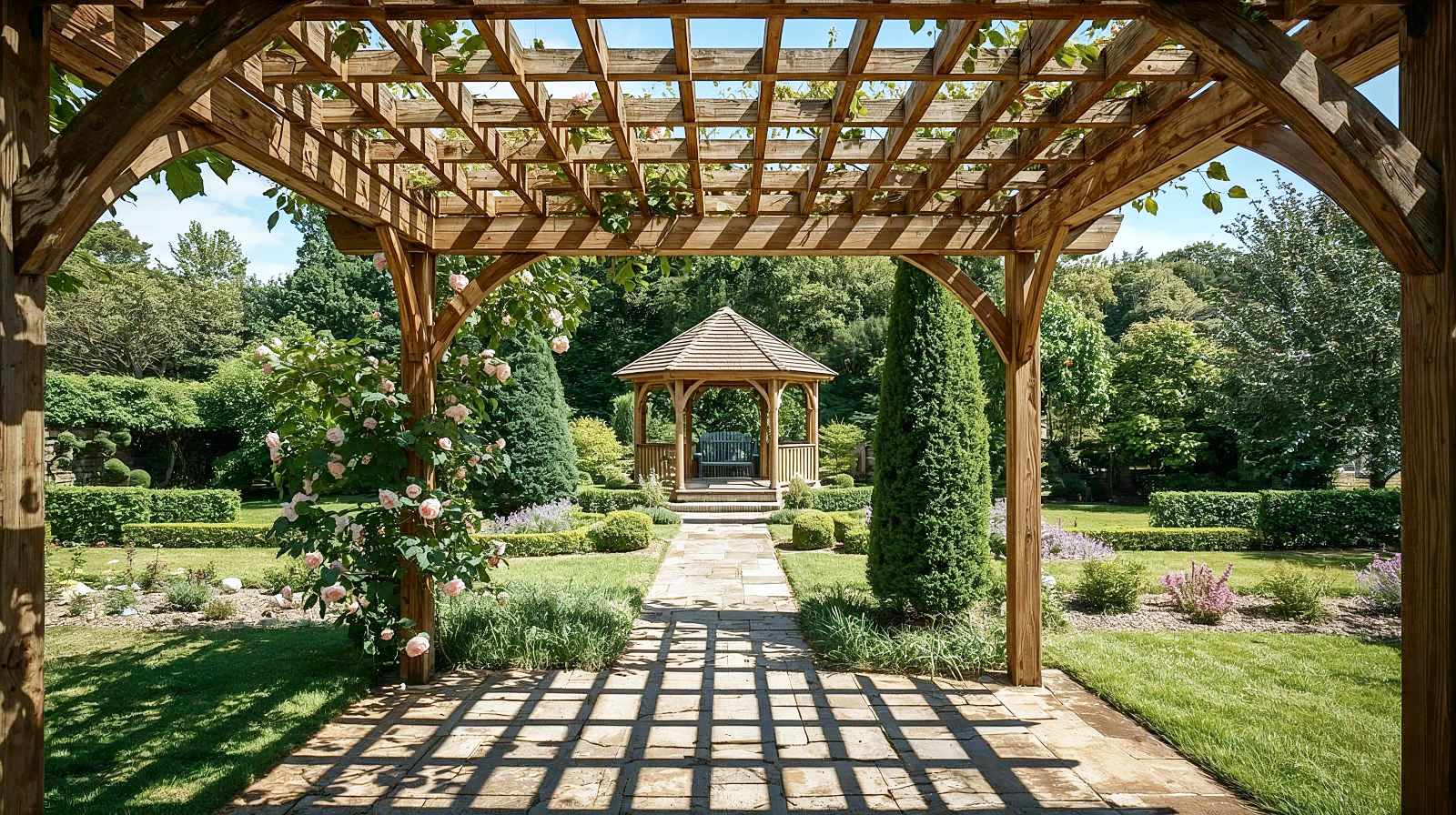
- The Pergola: Structurally, this is an open framework. It consists of vertical posts supporting cross-beams and a sturdy open lattice. Traditionally, it doesn’t have a solid roof or walls, though modern “bioclimatic” versions are changing that rule. It is designed to define a space (usually a walkway or a seating area) without closing it off completely.
- The Gazebo: This is the cousin of the pergola but comes with a solid, pitched roof and often a dedicated floor. It’s a standalone “room” in the garden, usually round, octagonal, or hexagonal, offering full shelter but less airflow.
- The Arbour: Think of this as a bench with a roof and walls on three sides. It’s a cosy reading nook for one or two people, not a dining area for a party.
- The Veranda: This is attached to the house, usually with a glass or solid roof, running along the elevation.
The pergola is the most versatile of the bunch. It casts dappled shade, breaking up the harsh midday sun (when we get it!) while maintaining that open-air feeling.
A Brief Pergola History: From Rome to the Home Counties
The pergola isn’t a modern invention. The word comes from the Latin pergula, meaning a projecting eave. The Romans used them to grow grapes for wine, creating cool, shaded walkways in their villas.
However, the pergola as we know it in Britain really took root during the Arts and Crafts movement of the late 19th and early 20th centuries. Architects like Sir Edwin Lutyens and garden designers like Gertrude Jekyll used them to create “rooms” outside. They understood that a garden shouldn’t just be viewed from a window; it should be walked through and lived in. They used heavy oak beams and brick pillars to create structures that felt like they had grown out of the earth.
Today, we’re seeing a renaissance. The “outdoor living” trend, accelerated by the lockdowns of the 2020s, has made us value our gardens as functional extensions of our homes. The modern pergola is the 21st-century answer to the Lutyens design, blending heritage aesthetics with modern technology.
Part 1: The Material World – Wood or Metal Pergola?
The first and most significant decision you will make is the material. In the UK market, this is primarily a heavyweight title fight: Timber vs. Aluminium.
1. Wooden Pergolas: The Traditional Charmer
Wood is the classic choice. It feels natural, warm, and blends in beautifully with trees and flowerbeds. However, not all wood is created equal.


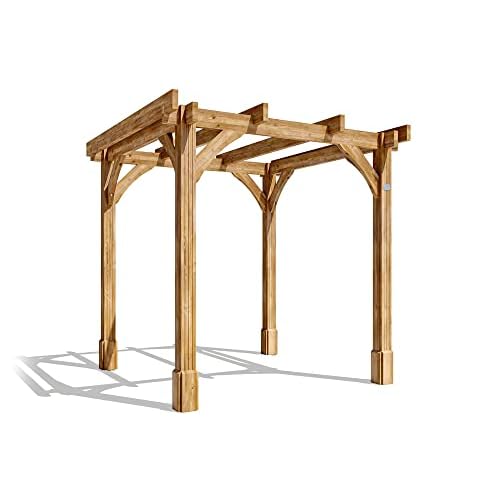
- Pressure-Treated Softwood: This is the budget-friendly option found in most DIY stores. It’s usually pine or spruce that’s been pumped full of preservatives (often called “tanalised”) to stop it from rotting.
- The Look: It often starts with a slight green tint due to the copper in the preservative, but this fades to a golden brown and eventually a silvery grey.
- Durability: decent, but it can warp or twist over time. You’ll need to treat it with wood preserver or oil every couple of years.
- Best For: DIY projects, painting (if you want a specific colour), and cottage-style gardens.
- Green Oak: The premium, heritage choice. “Green” doesn’t refer to the colour; it means the wood is fresh and hasn’t been dried out in a kiln before cutting.
- The Look: It’s chunky, rustic, and incredibly strong. As it dries in situ, oak develops splits and cracks (called “shakes”). This doesn’t weaken the structure; it adds character. It will turn a beautiful silver-grey colour as it ages.
- Durability: Exceptional. Oak is naturally resistant to rot and insect attack. You can largely leave it alone.
- Best For: Period properties, barn conversions, and anyone wanting a “forever” structure.
- Western Red Cedar and Larch: These sit in the middle. They have natural oils that fight off rot better than pine, and they have a lovely reddish hue when new. They’re great for a contemporary look without the coldness of metal.
2. Metal Pergolas: The Modern Marvel
If you want something sleek that you can install and forget about, metal is the way to go.


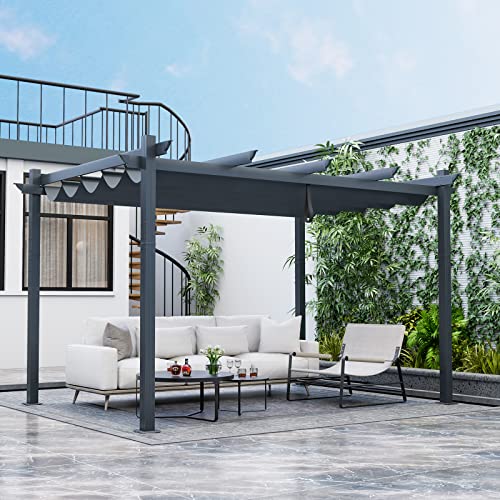
- Aluminium: This is the king of modern pergolas. It’s lightweight, strong, and doesn’t rust.
- The Look: Clean lines, usually powder-coated in dark grey (Anthracite RAL 7016) or black. It contrasts sharply with green foliage and looks fantastic against modern bi-fold doors.
- Maintenance: Virtually zero. A wipe down with soapy water once a year to remove bird droppings is all it needs.
- Flexibility: Aluminium allows for internal cabling, meaning you can hide wires for heaters and speakers inside the legs.
- Steel: Stronger than aluminium but much heavier. It needs to be galvanised (coated in zinc) or it will rust rapidly in the British climate. It’s often used for very specific, custom industrial designs or sculptural pieces.
Part 2: Pergola Roofs and The Great British Weather
Let’s be honest: designing a garden structure in the UK without considering rain is optimistic at best. A traditional open-rafter pergola is beautiful for climbing plants, but it won’t keep your burger dry during a sudden shower.
The Open Top
- Design: Just rafters. No solid cover.
- Pros: Airy, bright, and perfect for climbing plants like Wisteria to weave through. It creates dappled shade, which is lovely for lunch.
- Cons: You get wet. Furniture cushions need to be brought inside.
- Verdict: Best for decorative walkways or if you only sit out when it’s definitely sunny.
The Retractable Canopy
- Design: A fabric sheet on rails or wires that slides back and forth (Roman blind style).
- Pros: Versatile. You can have full sun when you want it and shade when you don’t.
- Cons: The fabric can get grubby with algae and moss if you don’t clean it. Crucially, most manufacturers advise retracting it in heavy wind or snow to prevent damage.
- Verdict: Great for south-facing gardens that get too hot in July, but requires management.
The Polycarbonate Sheet
- Design: Hard plastic sheets (twin-wall or solid) fixed to the top.
- Pros: Cheap and fully waterproof.
- Cons: Can look a bit “carport” if you aren’t careful. It can also be incredibly noisy when it rains—like living inside a drum. It can also trap heat, creating a greenhouse effect underneath.
- Verdict: Practical for a budget DIY build, but try to hide it with some trailing plants or a timber fascia.
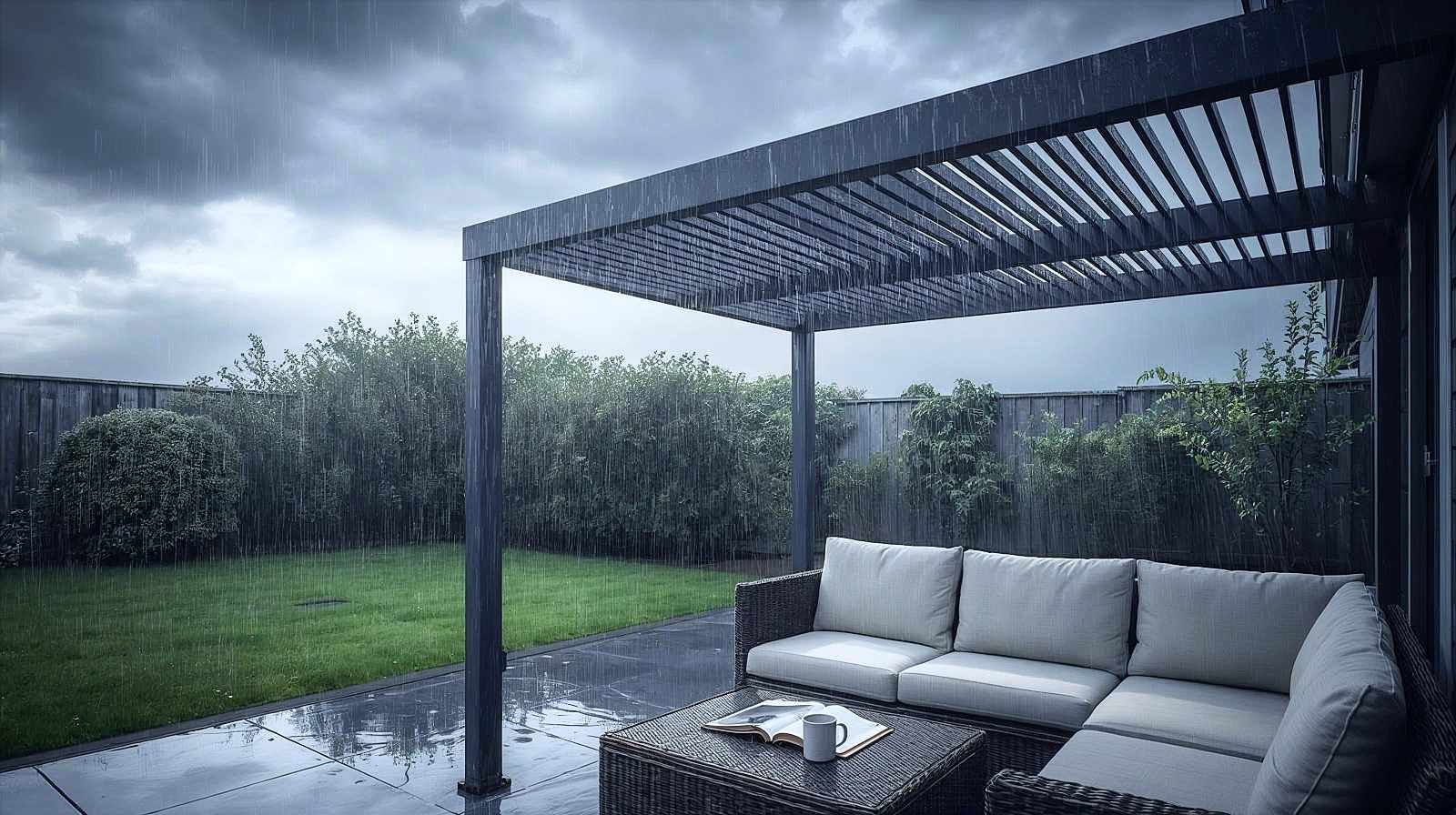
The Louvred Roof (Bioclimatic)

PRIMEYARD Pergola 3×4 m aluminium posts with louvered steel roof grey canopy
Bioclimatic Design: The integrated water drainage system, adjustable roof and high-quality material mix of aluminium and steel ensure a year-round pergola experience.
- Design: Tilting metal slats.
- Pros: The ultimate flexibility. You crank a handle (or press a button) and the slats tilt to let sun in. Close them flat, and they interlock to become fully waterproof, with internal gutters to drain the water away down the legs.
- Cons: Expensive. This is high-end territory.
- Verdict: The gold standard for extending your living space year-round.
Part 3: The Boring (But Vital) Legal Bit: Planning Permission
Do you need permission from the council to put up a pergola? Generally, no. In the UK, pergolas usually fall under “Permitted Development” rights. This means you can build one without filling out paperwork, provided you follow these strict rules:
- Height Limits:
- If the pergola is within 2 metres of your boundary (fence or wall), the maximum height is 2.5 metres (8ft 2in).
- If it is further than 2 metres from the boundary, it can go up to 3 metres (or 4 metres for a dual-pitched roof, though that’s rare for pergolas).
- Location: It cannot be in front of the principal elevation of your house (usually the front wall facing the road).
- Coverage: You cannot cover more than 50% of the land around your original house with garden buildings. (Note: “Original house” means as it stood in 1948, so if previous owners added extensions, that eats into your 50%).
- Balconies: It cannot include a veranda, balcony, or raised platform. If you are building a pergola on top of decking, be careful—if the decking is more than 30cm above the ground, you might need permission for the deck itself.
- Designated Areas: If you live in a Conservation Area, a National Park, or an Area of Outstanding Natural Beauty (AONB), the rules are stricter. You generally cannot build at the side of your property in these areas without permission.
- Listed Buildings: If your house is Listed (Grade I or II), you always need Listed Building Consent. Do not touch a brick or build a structure in the curtilage (grounds) without asking.
Pro Tip: If you are unsure, call your local council’s planning duty officer. It is much cheaper to check now than to have to tear it down later.
Part 4: Pergola Budgeting – What Will It Cost?
How long is a piece of string? The price varies wildly depending on size, material, and automation. Here is a rough guide for a standard 3m x 3m pergola.
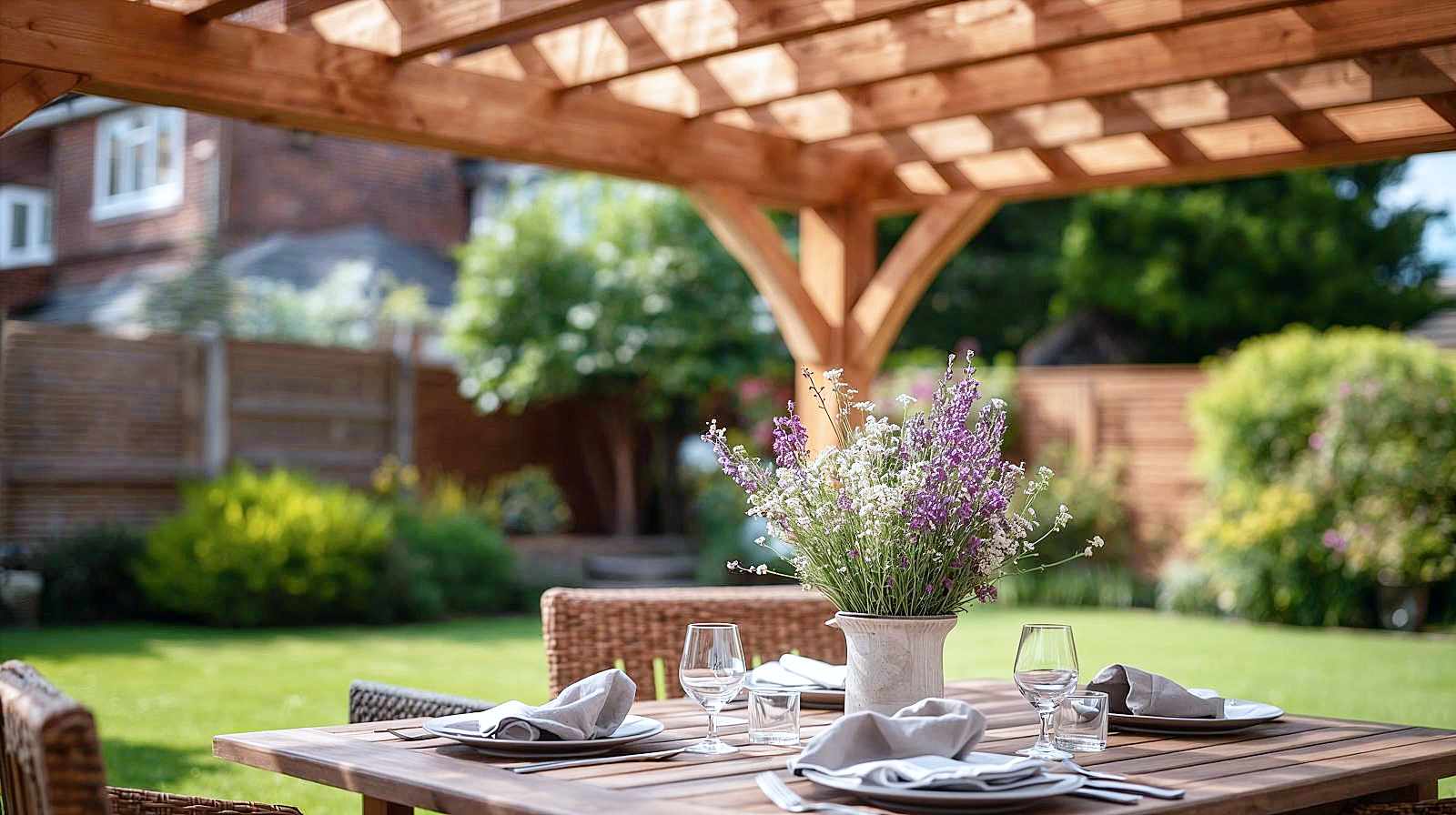
The Budget Build (£300 – £800)
- What you get: A flat-pack kit made of pressure-treated softwood from a DIY store (like B&Q or Wickes).
- Installation: DIY. You will need a drill, a spirit level, a saw, and a helper.
- Longevity: 10–15 years if you treat the wood regularly.
The Mid-Range (£1,000 – £3,500)
- What you get:
- Higher quality wood (like chunky cedar or Douglas Fir).
- A bespoke design built by a local carpenter.
- A basic manual aluminium kit with a retractable fabric roof.
- Installation: Either a confident DIY job or a tradesperson for a day or two.
- Longevity: 15–20+ years.
The High-End (£5,000 – £15,000+)
- What you get:
- A motorised bioclimatic aluminium pergola with LED lights, infrared heaters, and drop-down side screens (to stop the wind).
- A massive, hand-crafted Green Oak frame structure with traditional mortise and tenon joints.
- Installation: Professional installation is usually included or required due to the complexity and weight.
- Longevity: A lifetime.
Part 5: Bringing It to Life – Plants and Pergola Styling
A pergola without styling is just a skeleton. To truly make it part of your garden, you need to dress it up. This is where you can let your personality shine.
The Best British Climbers
You want plants that love our climate and are hardy enough to survive a frost. Here are the top picks for draping your structure in greenery:
- Wisteria (Wisteria sinensis): The absolute classic. Drooping racemes of purple flowers in late spring that look like a fairytale.
- Watch out: It is heavy and vigorous. You need a very strong pergola to hold a mature Wisteria. It can twist weak timber apart!
- Clematis: There are hundreds of types.
- Climbing Roses: Romantic and scented. Go for a thornless variety like ‘Zephirine Drouhin’ if you are building a walkway—you don’t want to snag your jumper every time you walk past.
- Star Jasmine (Trachelospermum jasminoides): This is becoming a UK favourite. It is evergreen (so it keeps its glossy leaves in winter) and produces small white flowers that smell incredible on a warm summer evening. It needs a sheltered, sunny spot.
- Honeysuckle (Lonicera): Perfect for a cottage vibe. It’s messy, wild, and loved by bees and moths.
Lighting and Heating
If you want to use your pergola in October (or a chilly August evening), you need warmth and light.
- Festoon Lights: Big, bulbous string lights draped loosely through the rafters create an instant festival/bistro vibe.
- Heaters: Forget gas patio heaters; they are inefficient. Go for infrared wall-mounted electric heaters. They heat you, not the air, so the heat doesn’t just blow away in the wind.
- Fire Pits: A fire pit in the centre is lovely, but ensure you have an open roof or plenty of ventilation so smoke doesn’t get trapped.
Part 6: Pergola Installation – DIY or Pro?
Can you build one yourself?
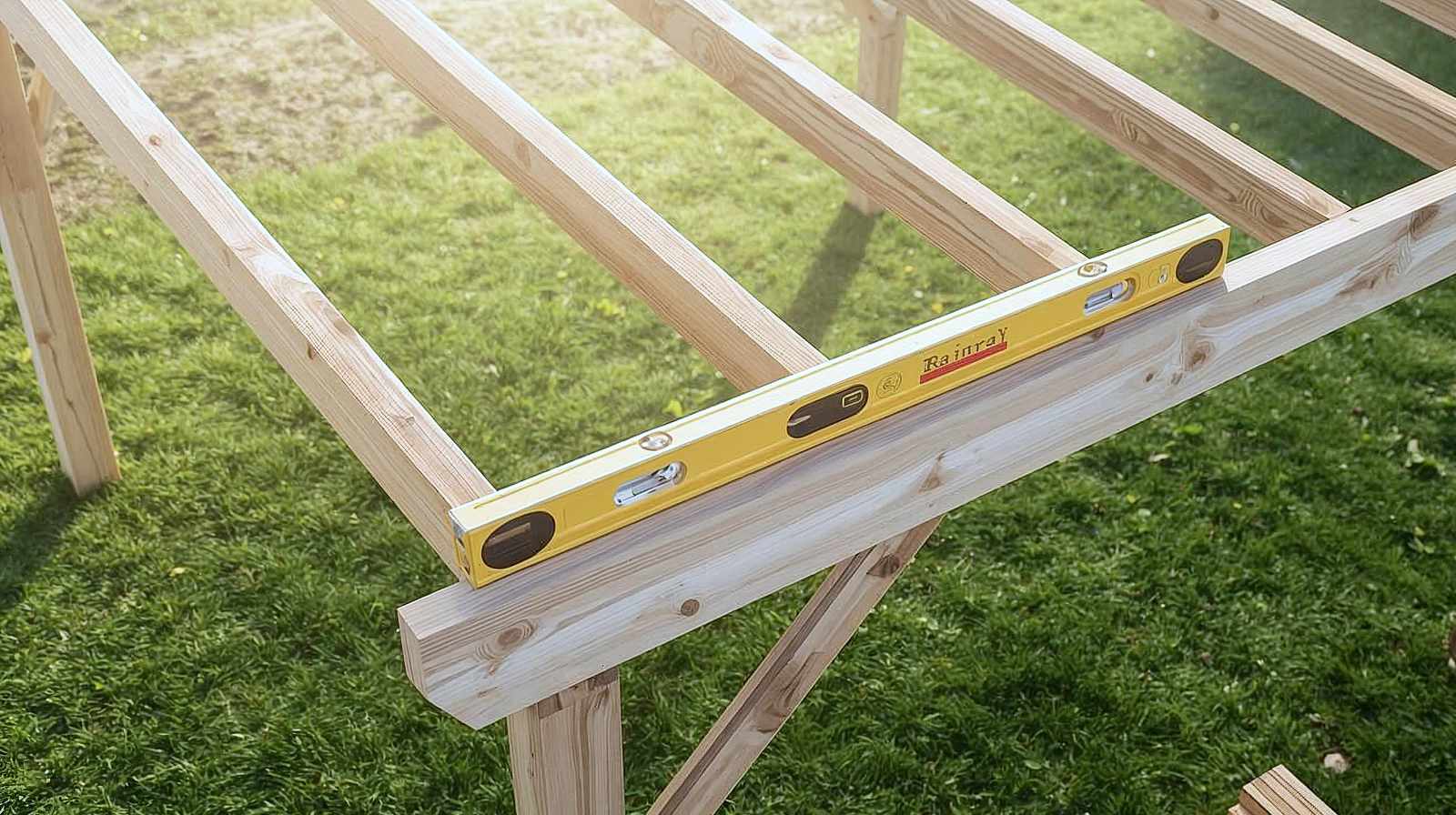
Yes, if:
No, if:
Conclusion: An Investment in Lifestyle
A pergola is more than just timber and screws. It’s an extra room. It’s a place to drink your morning tea while the dew is still on the grass. It’s a shelter for the family Sunday roast when the kitchen gets too hot. It’s a frame for nature to show off.
By choosing the right material for your budget and understanding the quirks of the British weather, you can build a space that adds value to your property and joy to your daily life. Whether you go for a rustic oak walkway dripping in roses or a sleek, high-tech aluminium pod with automated blinds, the result is the same: you’re reclaiming your garden, one square metre at a time.
So, get your tape measure out, check your local planning map, and get ready to enjoy the outdoors, rain or shine.
Further Reading & Resources
Here are some highly respected resources to help you take the next step:
- The Royal Horticultural Society (RHS) – Climbers for Pergolas
- Why read this: The gold standard for plant advice in the UK. This list helps you pick plants that won’t destroy your structure or die in the frost.
- Planning Portal – Outbuildings
- Why read this: The official government source for planning rules. Essential for checking the latest regulations on height and boundaries.
- Gardeners’ World – How to Build a Pergola
- Why read this: A practical, step-by-step DIY guide from the most trusted name in British gardening.
- Houzz UK – Pergola Design Ideas
- Why read this: A massive gallery of real British homes featuring pergolas, perfect for visual inspiration before you buy.
Subscribe for more
Get the latest posts delivered monthly so you never miss an article. Sign up below:


