A Restorer’s Secrets: The Guide to Antique Doll Eye Replacement
Your complete guide to antique doll eye replacement. Learn the history, tools, and techniques to safely restore your cherished bisque and composition dolls.
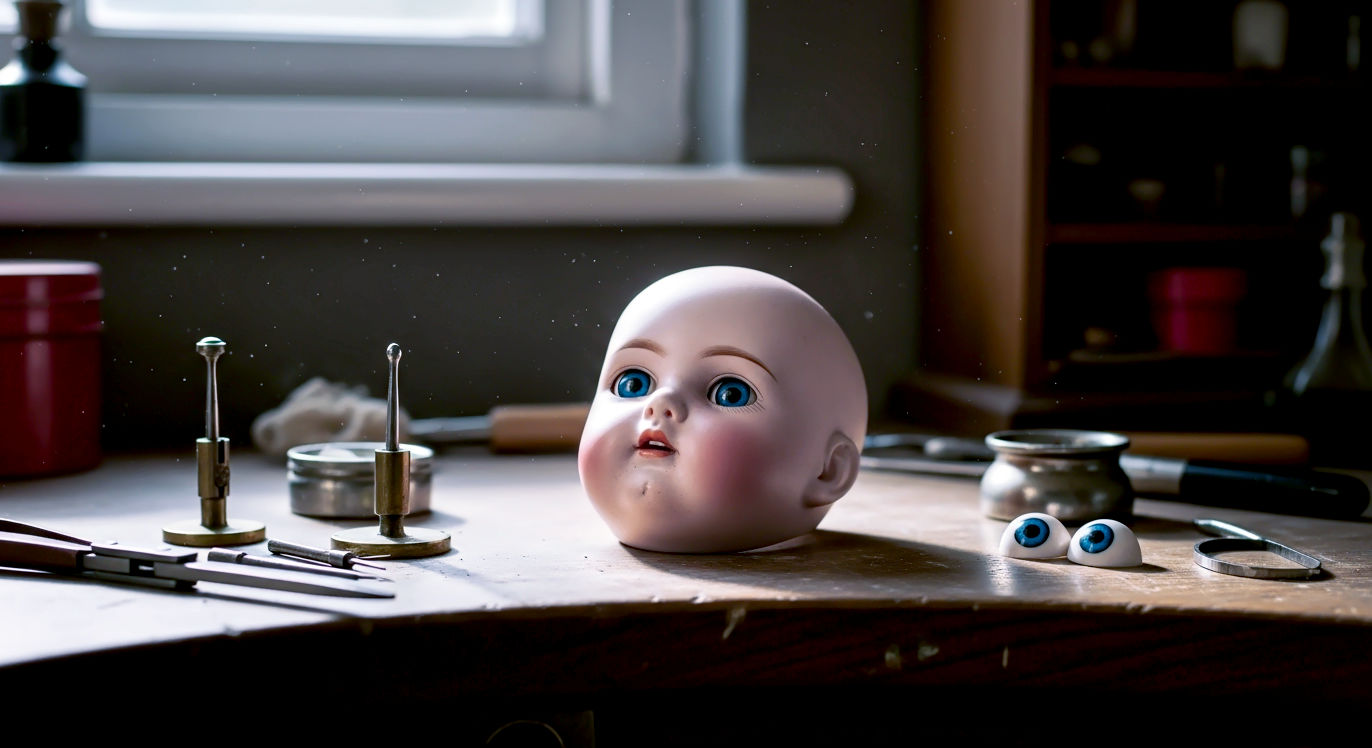
There’s a unique kind of quiet in a British attic. It’s a space filled with forgotten treasures, packed away in dusty boxes under the eaves. Tucked inside one of those boxes, you might find her: a doll from your grandmother’s childhood. She’s beautiful, with a delicate hand-painted face and a dress made from scraps of once-fashionable fabric. But something’s wrong. One of her bright, glass eyes is missing, leaving a sad, empty socket. Or perhaps both are gone, making her look blind to the passage of time.
That pang of sadness you feel isn’t just for a broken toy. It’s for a piece of history, a tangible link to a person you loved. You might think she’s broken forever, destined to stay in the box. But what if you could fix her? What if you could give her back her gaze, and in doing so, bring a piece of your family’s story back to life?
Welcome to the meticulous and deeply rewarding world of antique doll restoration. This isn’t about a quick fix with a tube of superglue. It’s a craft of patience, care, and historical respect. And at the heart of one of its most common and transformative procedures—the eye replacement—is the Specialized Antique Doll Eye Replacement Kit.
This guide is your complete handbook. We’re going to lift the lid on this fascinating subject, exploring everything from the different types of magical glass eyes to the precise, steady-handed techniques used to set them. We’ll uncover the history of these miniature marvels and show you, step-by-step, how you can safely and beautifully restore the gaze of a cherished heirloom. Whether you’re a curious beginner or a budding collector, you’re in the right place. Let’s get started.
Please note: The content below may contain affiliate links. If you make a purchase through these links, we could earn a commission, at no additional cost to you.
What’s in the Box?: Demystifying the Doll Eye Kit
Opening a specialized doll eye kit for the first time can feel a bit like looking at a surgeon’s tray. It’s full of odd-looking tools and strange materials. But don’t be intimidated! Each item has a specific job, and understanding them is the first step toward a successful restoration. Think of it as the ultimate doll-sized A&E department.
A good kit is more than just a pair of new eyes; it’s a complete system designed to handle a delicate operation. While they vary, most professional-grade kits will contain a core set of components.
The Stars of the Show: The Eyes Themselves
The replacement eyes are, of course, the most important part. They aren’t just plastic beads. Antique reproduction eyes are works of art in their own right, crafted to mimic the materials and methods of the past. The type of eye you need depends entirely on the doll’s age, origin, and design.
- Glass Paperweight Eyes: These are the crème de la crème of doll eyes, famous for their depth and realism. They were perfected by French doll makers like Jumeau and Bru in the late 19th century. They’re made with a coloured iris and pupil that are embedded deep within a dome of clear glass, just like a decorative paperweight. This gives them a wonderfully lifelike, watery appearance.
- Glass Blown Eyes: A common type found in German dolls. As the name suggests, these are made from hollow blown glass. They are lighter than paperweight eyes and were often used in dolls with “sleeping” mechanisms.
- Threaded Eyes: Some glass eyes have a fine, thread-like pattern radiating from the pupil. This was another technique used to give the iris texture and depth.
- Composition Eyes: Made from a mixture of materials like sawdust and glue, these were a cheaper alternative to glass. They were often used in the early 20th century. They can be prone to cracking and crazing over time.
- Acrylic and Plastic Eyes: While most antique restorers stick to glass for authenticity, modern acrylic eyes can be a good, durable option for later vintage dolls from the mid-20th century.
Eyes also come in two main functional types: stationary (fixed in place) and sleep eyes. Sleep eyes are mounted on a metal “rocker” with a weight. When the doll is laid down, gravity pulls the weight, causing the eyes to close. It was a magical innovation for its time!
The Tools of the Trade
Beyond the eyes, your kit will have a selection of specialized instruments. Each one helps you perform a delicate task without damaging the fragile doll’s head.
- Eye Setters (or Levers): These are small, often curved, metal tools. They look a bit like a dentist’s pick or a tiny, elegant crowbar. Their job is to help you gently pry out the old eyes from inside the head and to nudge the new ones into the perfect position.
- A Heat Source: This is usually a craft-focused heat gun or a special lamp. Why heat? Most antique doll heads are made of bisque (unglazed porcelain) or composition. The original eyes were set in place with plaster or wax, which went hard. Gently warming the head softens this old setting material, making it possible to remove the eyes without cracking the precious head. This is a delicate step that requires huge care.
- Setting Compound: This is what you’ll use to fix the new eyes in place. Traditional kits come with Plaster of Paris, which you mix with water to create a paste. Modern kits might include a special setting wax, which is easier for beginners as it can be warmed and repositioned until you get the placement just right.
- Gentle Cleaning Tools: This might include soft brushes (like makeup brushes), cotton buds, and lint-free cloths to clean out any old plaster and dust from the eye sockets before you install the new ones.
The All-Important Instructions
Finally, any good kit should come with a clear, detailed set of instructions. This is your roadmap. It should guide you on how to identify your doll’s needs, how to use the tools safely, and how to achieve a professional-looking result. Don’t ever throw these away!
A Look into the Past: A Brief History of Doll Eyes
To truly appreciate the craft of eye replacement, it helps to understand the history of the dolls themselves. The evolution of doll eyes tells a story of artistry, innovation, and the desire to create ever-more-lifelike companions for children.
From Painted Stares to Glassy Gazes
In the 18th and early 19th centuries, most dolls were made of wood, wax, or papier-mâché. Their faces were hand-painted, and their eyes were often simple, flat dabs of paint. They had a certain charm, but they lacked depth.
The revolution came in the mid-1800s, with the rise of German and French doll manufacturing. This was the golden age of the doll, and the competition between the two nations drove incredible leaps in quality and artistry.
- The German Powerhouse: Towns like Lauscha in Germany, already world-famous for their glass Christmas ornaments, turned their skills to doll eyes. They mastered the art of blowing hollow glass spheres, which were then cut and painted from the inside to create beautiful, affordable eyes. This industrial efficiency made Germany the world’s leading doll producer.
- The French Artists: While Germany focused on volume, French makers focused on luxury. Companies like Jumeau, Bru, and Steiner treated doll making as high art. They created the stunning paperweight eyes we talked about earlier, which gave their “bébés” an incredibly soulful and realistic expression. These dolls were expensive and became status symbols for wealthy Victorian families.
The Magic of Movement
The next great leap was making the eyes move. In the late 19th century, inventors patented the “sleep eye” mechanism. A simple rocker and a lead weight meant that for the first time, a doll could “fall asleep” when her owner put her to bed. This simple piece of engineering added a whole new layer of interactive play and realism.
Some French makers even created “flirty” eyes that could move from side to side, operated by a small lever at the back of the head. These innovations show how doll makers were constantly pushing to make their creations feel more like real children.
The 20th Century and Beyond
As the 20th century dawned, new materials like celluloid and, later, plastic, made dolls cheaper and more accessible than ever. Glass eyes slowly gave way to more durable, mass-produced plastic ones. But for collectors, the magic remained in those early bisque-headed dolls from the golden age. This growing passion for collecting in the post-war years created a new demand: the need to repair and restore these fragile antiques. And with that, the specialized restoration kit was born, allowing dedicated enthusiasts to become custodians of these beautiful pieces of history.
More Than Just a Toy: Dolls in British Culture
Dolls hold a special place in our collective memory. They aren’t just playthings; they are silent witnesses to history, reflecting the society that created them. In Britain, they have been everything from fashion accessories to cherished family members.
Tiny Trendsetters and Heirlooms
Long before Vogue magazine existed, dolls were used as miniature fashion mannequins. In the 18th century, elegantly dressed “fashion dolls” were sent from Paris to London to show wealthy ladies the latest styles. They were tools of the trade for dressmakers and a way for the elite to stay ahead of the trends.
But their primary role, of course, was as companions for children. A doll was often a child’s most treasured possession, a confidante who listened to secrets and shared in imaginary adventures. They were passed down from mother to daughter, becoming precious heirlooms that connected generations. The wear and tear on these dolls—a missing eye, a mended dress—is a physical record of that love.
The Rise of the Collector
The hobby of doll collecting really took off in the UK in the latter half of the 20th century. People began to appreciate the artistry and history locked away in these antique figures. Today, there is a thriving community of British collectors. They attend doll and teddy bear fairs in towns and cities across the country, join clubs to share their knowledge, and visit museums like London’s V&A Museum of Childhood to admire rare examples.
This passionate community understands that restoring a doll is about more than just fixing it. It’s an act of preservation. By replacing a pair of eyes, a restorer isn’t just making a doll look pretty; they are honouring the original creator’s craft and preserving a piece of social history. It’s a skill that sits alongside other heritage crafts like clock-making or furniture restoration.
The Doll Doctor Is In: Your Step-by-Step Guide to Eye Replacement
Right, it’s time to get practical. We’re going to walk through the process of replacing a doll’s eyes. Remember, the golden rule is patience. This is not a race. It’s a slow, careful process.
Let’s start with a simple analogy. Think of it like being a doll’s optician. You need to assess the patient, carefully remove the old, broken glasses (or eyes), clean everything up, and then fit a new pair perfectly so they can see the world clearly again.
Before you begin, a crucial word of warning: If your doll is extremely rare, valuable, or sentimental, consider taking it to a professional “doll hospital.” There are expert restorers across the UK who have decades of experience. A botched DIY job on an irreplaceable heirloom is a heartbreaking thing. This guide is for common, sturdy antique dolls that make for good practice.
Step 1: Preparation and Assessment
This is the planning stage. Don’t even think about picking up a tool until you’ve done this.
- Identify Your Doll: First, who is she? Look for any markings on the back of her head or neck. These can tell you the maker (like “Armand Marseille” or “Simon & Halbig,” two common German makers) and the mould number. A quick search online can reveal her age and what type of eyes she originally had. This is vital for choosing authentic replacements.
- Measure for New Eyes: You need to measure the eye sockets to order the right size. Use a flexible measuring tape or a piece of string to measure the width of the eye opening in millimetres. Doll eyes are sold by diameter, so this measurement is key.
- Choose the Right Eyes: Order your replacement eyes from a specialist supplier. Make sure they match the original style (e.g., paperweight for a French doll, blown glass for a German one) and colour. Brown and blue were the most common colours for antique dolls.
- Set Up Your Workspace: Find a clean, bright, and quiet spot. Lay down a soft towel or a piece of foam on your work surface. This will protect the doll’s face and stop small parts from rolling away. Assemble all your tools from the kit so they’re within easy reach.
Step 2: Gaining Access and Removing the Old Eyes
Now for the surgery itself. Take a deep breath.
- Remove the Wig and Pate: The doll’s wig is usually glued onto a cardboard or cork cap called a “pate.” You need to gently pry this off to get inside the head. Use a thin, blunt tool like a palette knife. Slide it carefully under the edge of the wig and work your way around. Sometimes, a little gentle warmth from a hairdryer on a low setting can help soften the old glue.
- Inspect the Interior: Once the pate is off, you’ll see the inside of the head. You should see the old eyes held in with a blob of white plaster or dark-coloured wax. If it’s a sleep-eye doll, you’ll also see the metal rocker mechanism.
- Gently Heat the Head: This is the most nerve-wracking part. Using your craft heat gun on its lowest setting, gently warm the area around the eyes from outside the head. Keep the heat gun moving constantly. Never hold it in one spot. The goal is to warm the bisque or composition just enough to soften the plaster inside. It should feel warm to the touch, not hot. This might take a few minutes.
- Lever Out the Old Eyes: Now, working from inside the head, use your eye-setter tool. Carefully chip away at the softened plaster around one eye. Once you’ve cleared some space, try to get the tool behind the eye and gently lever it out. It should pop out with a bit of encouragement. If it doesn’t, apply a little more heat. Never, ever force it. Repeat for the other eye. For sleep eyes, you’ll need to carefully detach the rocker from the plaster before removing the whole mechanism.
Step 3: Cleaning and Preparing for the New Eyes
A clean workspace is essential for a good fit.
- Clean the Eye Sockets: Use your brushes and some tweezers to remove every last bit of the old plaster and any dust or grime from inside the head and around the eye sockets. You want a perfectly clean surface for the new setting compound.
- Test Fit the New Eyes: Before you mix any plaster, check that your new eyes fit. You can use a small lump of Blu-Tack or modelling clay inside the head to temporarily hold the eyes in place. This is your chance to get the positioning perfect. Check from the front. Do they look straight? Are they looking in the same direction? This pre-fitting stage is the secret to avoiding a cross-eyed or “surprised” look. Adjust them until you are 100% happy with their gaze.
Step 4: Setting the New Eyes
It’s time to make it permanent.
- Prepare Your Setting Compound:
- If using Plaster of Paris: Mix a small amount with a few drops of water until you have a thick, creamy paste, a bit like toothpaste. Don’t make it too runny, and only mix what you need, as it starts to set quickly.
- If using Setting Wax: Gently warm the wax until it’s soft and pliable, like Plasticine.
- Position the First Eye: Put a small ball of your prepared plaster or wax onto the back of one of the new eyes. Carefully place it into the eye socket from inside the head, using your temporary Blu-Tack position as a guide.
- Fine-Tune the Gaze: From the front, check the position. Use your setting tool to gently nudge the eye until it’s perfect. This is the most artistic part of the process. You are literally deciding the doll’s expression.
- Secure the Eye: Once you’re happy, pack more plaster or wax around the back of the eye to hold it firmly against the inside of the eye socket. Repeat the whole process for the second eye, constantly checking that they are aligned and look natural together.
- For Sleep Eyes: This is a bit trickier. You’ll need to set the rocker mechanism back into the plaster, ensuring it can move freely and that the weight hangs correctly so the eyes open and close smoothly.
- Let It Cure: Leave the doll lying face up in a safe place for the plaster to fully harden. This can take up to 24 hours. Don’t rush it!
Step 5: The Finishing Touches
The final steps to bring her back to her former glory.
- Reattach the Pate and Wig: Once the plaster is rock solid, you can glue the pate back on. Use a good quality, acid-free craft glue. Then, re-glue the wig onto the pate.
- A Final Clean: Give her face a very gentle wipe with a soft, dry cloth to remove any fingerprints or dust.
Step back and admire your work. You’ve done it. You’ve taken a broken piece of history and made it whole again. The doll looking back at you now has her sparkle back, ready to be cherished for another generation.
A Restorer’s Toolkit: Practical Tips and Common Pitfalls
Like any craft, doll restoration has its share of tricks and traps for the unwary. Here are a few bits of hard-won wisdom to help you on your way.
Choosing Your First Kit
For a beginner, look for a kit that comes with setting wax instead of plaster. It’s far more forgiving, as you can warm it up and reposition the eyes if you don’t get it right the first time. Plaster, once it sets, is permanent. Also, start with a common, relatively inexpensive German bisque doll. They are sturdy and a great place to learn.
Common Mistakes to Avoid
- The Crack: The number one fear is cracking the head. This almost always happens from using too much heat or too much force when removing the old eyes. Go slow. Be gentle. If something isn’t moving, stop and rethink.
- The Wonky Eye: We’ve all seen dolls with a strange, startled, or cross-eyed look. This comes from rushing the setting stage. Use the Blu-Tack trick to find the perfect position before you even touch the plaster. A well-set pair of eyes should have a calm, straight-ahead gaze, with both pupils pointing in the same direction.
- The Wrong Glue: Never use superglue or hot glue anywhere near an antique doll. They are far too harsh and can cause permanent damage to the delicate bisque or composition. Only use archival-quality, acid-free craft glues.
Knowing When to Call a Professional
Sometimes, a project is just too big or too risky for a home restorer. You should seek out a professional doll hospital if:
- The doll is incredibly valuable or rare.
- The head is already badly cracked or has pieces missing.
- The repair involves a complex mechanism you don’t understand.
- You simply don’t feel confident enough to do the job without causing damage.
There is no shame in asking for help. A professional has the experience and equipment to handle the most difficult cases and can save a doll that might otherwise be lost.
A Lasting Legacy
In our fast-paced, disposable world, taking the time to mend something old is a radical act. It’s a quiet rebellion against the idea that everything can be easily replaced. Restoring an antique doll is about so much more than fixing a toy. It’s about connecting with the past, honouring the craftsmanship of a bygone era, and preserving a story.
That doll in the attic isn’t just an object. She was a companion, a friend, a keeper of secrets. By carefully replacing her eyes, you are not just completing a technical task. You are restoring her character, her personality, and her place in your family’s history. With a steady hand and a patient heart, you can give her a future as bright as her newly restored gaze.
Further Reading and Resources
For those looking to dive deeper into the world of doll collecting and restoration in the UK, these resources are an excellent place to start:
- The V&A Museum of Childhood: Part of the Victoria and Albert Museum, its collections are a treasure trove of historical dolls and toys.
- The Doll Collectors’ Club of Great Britain: A wonderful organisation for enthusiasts, offering publications, events, and a network of fellow collectors.
- Leith Doll’s Hospital: A well-regarded professional restoration service in Scotland, their website offers a glimpse into the professional side of the craft.
Subscribe for more
Get the latest posts delivered monthly so you never miss an article. Sign up below: