Wearable Tech: Game-Changer on Your Wrist or Just a Pricey Gimmick?
From fitness trackers to smart rings, is wearable technology truly changing our lives? This ultimate guide digs into the tech, the benefits, the privacy risks, and the future.
It’s a familiar scene. You’re down the pub, mid-way through a fiercely competitive quiz, when a teammate’s wrist buzzes. A quick glance, a subtle swipe, and they’re back in the game. Or perhaps you’re out for a weekend stroll in the Peak District and see a runner glide past, eyes fixed on the glowing numbers on their wrist tracking their pace, heart rate, and distance.
From the Apple Watch on a commuter’s arm on the Tube to the Fitbit tracking steps at a local Parkrun, wearable technology is everywhere. These little gadgets, strapped to our bodies, promise to make us healthier, more efficient, and more connected. They’re our personal trainers, our digital wallets, and our pocket PAs, all rolled into one.
But let’s be honest, there’s a nagging question. Are these devices genuinely transforming our lives for the better, making them a true game-changer in modern society? Or are they just expensive, data-hungry gimmicks—another gadget we don’t really need, designed to keep us hooked to our screens and worried about hitting our daily step count?
This is the ultimate guide to answering that question. We’ll dig into what wearable tech actually is, journey through its surprisingly long history, see how it works, and weigh up the powerful arguments for both sides. By the end, you’ll have everything you need to decide for yourself.
Please note: The content below may contain affiliate links. If you make a purchase through these links, we could earn a commission, at no additional cost to you.
So, What Exactly Is Wearable Technology?
Before we dive in, let’s get our terms straight. It sounds simple, but ‘wearable technology’ covers a lot of ground.
At its core, wearable technology (or ‘wearables’) refers to smart electronic devices that can be worn as accessories, embedded in clothing, or even implanted in the body. They’re designed to collect data and provide real-time feedback to the user.
Think of them as tiny, specialised computers that you wear instead of carry. The most common ones you’ll see are:
- Smartwatches: Like the Apple Watch or Samsung Galaxy Watch, which are essentially extensions of your smartphone on your wrist.
- Fitness Trackers: Like those from Fitbit or Garmin, which focus primarily on monitoring health and activity metrics.
- Smart Rings: Sleek rings like the Oura that track sleep and activity with impressive subtlety.
- Smart Glasses: Eyewear with built-in displays or cameras, bringing digital information into your line of sight.
Most wearables share a few key ingredients:
- Sensors: The heart of the device, collecting data about you and your environment (e.g., motion, heart rate, location).
- A Processor: The tiny brain that makes sense of all that data.
- Connectivity: A way to talk to other devices, usually via Bluetooth to your smartphone.
- A Battery: The power source that keeps it all running.
It’s this combination that turns a simple watch or ring into a powerful tool for monitoring and interacting with our world.
A Brief History of Wearables: From Clunky Gadgets to Sleek Companions
You might think wearables are a product of the last decade, but their roots go back much further. Britain even had its own quirky entry into the race.
The story arguably begins not with health, but with nerdy convenience. In the 1970s and 80s, the calculator watch was the height of geek chic. The Pulsar calculator watch, released in 1975, was a chunky, futuristic gadget that let you do sums on your wrist. It wasn’t smart, but it was the first sign that we wanted more from our watches than just the time.
Britain’s own Sinclair Radionics, founded by the legendary Sir Clive Sinclair, tried to get in on the act with the “Black Watch” in 1975. It was a futuristic-looking digital watch that was revolutionary for its time but was famously unreliable and a commercial flop. It was an early lesson that a good idea needs good execution.
The real shift towards modern wearables began in the early 2000s with the rise of fitness tracking. Pedometers had been around for ages, but companies like Fitbit, founded in 2007, had a brilliant idea: what if a device could not only track your steps but also wirelessly sync that data to your phone and the internet?
This was the spark. The Fitbit Classic (2009) was a simple clip-on device, but it introduced the concepts that define wearables today: all-day tracking, syncing with an app, and turning your data into easy-to-read charts and goals. It gamified health.
Then, in 2015, Apple launched the Apple Watch. This was the moment wearables went from a niche for fitness enthusiasts to a mainstream consumer product. It combined health tracking with the full power of a smartphone—notifications, apps, contactless payments—and wrapped it in a premium design. The game had officially changed.
How Do They Work? The Magic Inside the Machine
So, how does that slim watch on your wrist know you’ve climbed a flight of stairs or that your heart rate has spiked? It’s not magic, but it is clever.
The Simplified Version: Your Body’s Little Spy
Think of your wearable as a tiny, very observant spy that lives on your wrist. It’s equipped with a toolkit of sensors to watch what you’re doing, and it reports everything back to headquarters (your smartphone app).
- It feels your movement: An accelerometer is the key sensor for tracking steps. It’s a tiny device that senses motion in any direction. When you walk, your arm swings in a repeating pattern. The accelerometer picks this up, and the device’s software is smart enough to count these patterns as steps.
- It sees your blood flow: Ever noticed the flashing green lights on the back of your smartwatch? That’s a heart rate sensor. It uses a method called photoplethysmography (PPG). It sounds like a mouthful, but the idea is simple. The watch shines green light onto your skin. Blood is red, so it absorbs green light. Between heartbeats, less blood flows through the vessels in your wrist, so more light is reflected back to the sensor. By measuring these tiny changes, the watch can calculate your heart rate with surprising accuracy.
- It knows your location: A GPS chip, just like the one in your phone or car sat-nav, tracks your exact position. This is how wearables can map your run, calculate your speed, and measure the distance you’ve covered.
All this data is then sent via Bluetooth to an app on your phone, which crunches the numbers and presents them as simple, understandable charts: ‘You slept for 7 hours and 32 minutes’ or ‘You walked 8,500 steps today’.
The Nitty-Gritty: A Look Under the Bonnet
For those who want a bit more detail, the technology is fascinating. Modern wearables are packed with an incredible array of sensors:
- Gyroscopes: These work with the accelerometer to understand orientation and rotation. This helps the device know not just that you’re moving, but how you’re moving—whether you’re swimming, cycling, or just lifting a pint.
- Barometric Altimeter: This measures air pressure. As you go up, air pressure drops. Your watch uses this to count how many flights of stairs you’ve climbed.
- SpO2 Sensor: This measures blood oxygen saturation by shining red and infrared light through your skin. It can be an indicator of respiratory health.
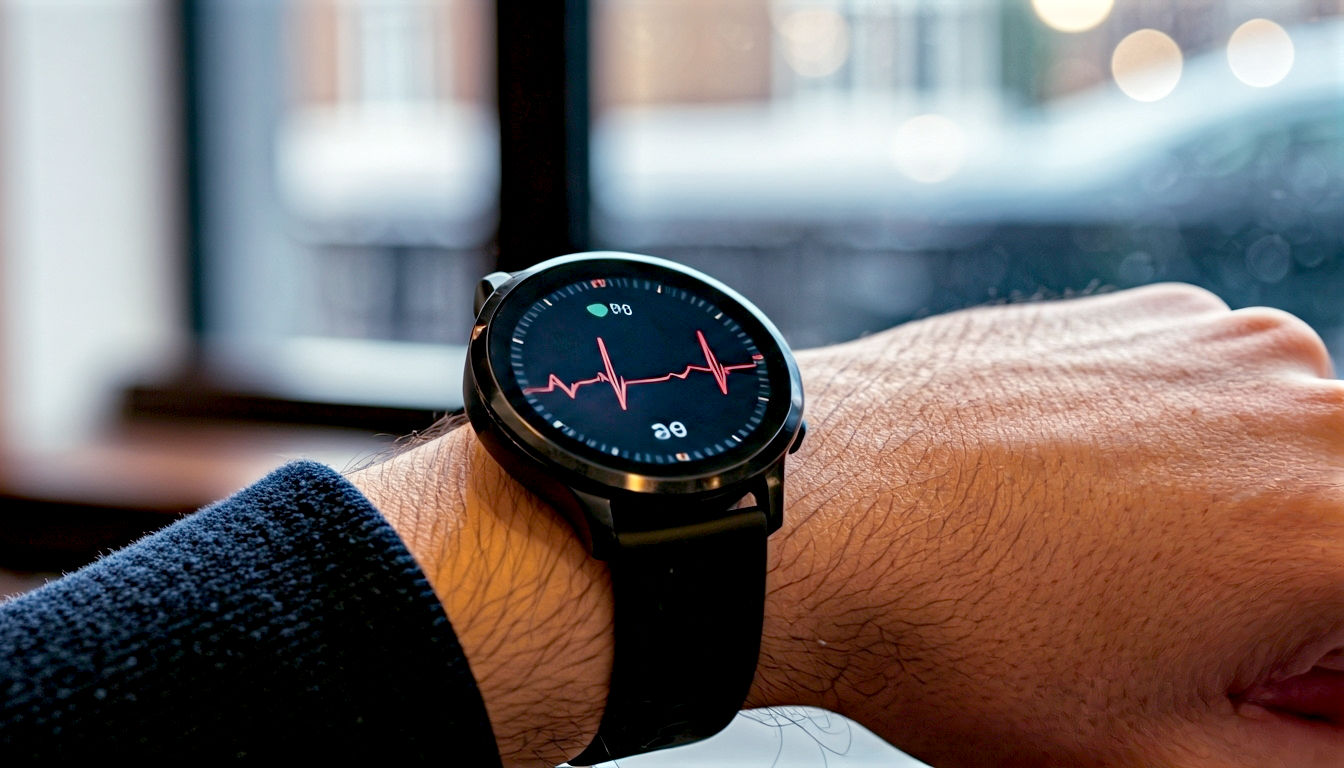
- ECG (Electrocardiogram) Sensor: Found in more advanced smartwatches, this can take an electrical measurement of your heart’s rhythm. By touching a finger to the watch’s crown, you complete a circuit, allowing it to detect signs of irregularities like Atrial Fibrillation (AFib), a common heart condition.
- Skin Temperature Sensor: This can track changes in your skin temperature overnight, which can be linked to your menstrual cycle or the onset of illness.
It’s this fusion of multiple sensors that allows a wearable to build up a detailed, 24/7 picture of your body’s performance.
The Case for Game-Changer: More Than Just Telling the Time
This is where wearables make their pitch for being an essential part of modern life. The benefits can be broken down into a few key areas.
Your Personal Health MOT
This is arguably the biggest selling point. Wearables have put health monitoring, once the preserve of clinics and hospitals, into the hands of ordinary people.
- Motivation and Awareness: The simple act of tracking your activity can be a powerful motivator. The visual prompt to ‘close your rings’ on an Apple Watch or hit a 10,000-step goal on a Fitbit encourages people to move more. It makes abstract health goals tangible and, for many, fun. It’s a huge reason why so many people at your local Parkrun will be sporting one.
- Deeper Sleep Insights: For years, most of us had no idea how well we were actually sleeping. Wearables break down your night into light, deep, and REM sleep stages. This can help you understand why you feel tired and empower you to make changes, like avoiding caffeine late at night or setting a more consistent bedtime.
- Serious Heart Health Monitoring: This is where the tech gets really impressive. High and low heart rate notifications can alert users to potential issues they were unaware of. The ECG function on devices like the Apple Watch has been credited with saving lives by detecting AFib, a leading cause of stroke, allowing people to seek medical help sooner.
- NHS Integration: The potential here is enormous. The NHS is actively exploring how wearables can be used for remote patient monitoring. Imagine a patient with a chronic heart condition whose data is automatically sent to their doctor, allowing for early intervention if things take a turn. Trials are already underway, potentially easing the burden on hospitals and empowering patients to manage their own health from home.
The Ultimate Convenience
Beyond health, wearables make everyday life that little bit smoother.
- Contactless Payments: Paying for your coffee or tapping onto the Tube with a flick of your wrist is undeniably cool and convenient. You don’t need to dig out your phone or wallet.
- Notifications at a Glance: A discreet buzz on your wrist lets you see an important message or who’s calling without pulling out your phone in the middle of a meeting or a conversation.
- On-Wrist Navigation: Trying to find your way around a new city is so much easier with subtle vibrations on your wrist telling you when to turn left or right. It’s far more discreet and safer than staring down at your phone.
A Safety Net on Standby
For many, the most compelling features are those they hope they’ll never have to use.
- Fall Detection: Many smartwatches can detect if the wearer has a hard fall. If they don’t respond within a minute, the watch can automatically call emergency services and send a message to their emergency contacts. For older people living alone or anyone with mobility issues, this can be a lifeline and provide huge peace of mind for their families.
- Emergency SOS: With a long press of a button, you can quickly call for help and share your location, even if your phone is out of reach.
Beyond Personal Use: The Professional Edge
It’s not just about us as individuals. Wearables are becoming powerful tools in the professional world.
- Elite Sports: Premier League football clubs have been using wearables for years. Players wear GPS vests (from companies like STATSports) that track every movement on the pitch—sprint speed, distance covered, fatigue levels. This data allows coaches to optimise training, prevent injuries, and make tactical decisions.
- Workplace Safety: In industries like construction or logistics, wearables can monitor for signs of fatigue or heat stress in workers, and even detect falls, creating a safer working environment.
The Case for Gimmick: Are We Just Paying for Problems?
Of course, it’s not all sunshine and roses. There’s a strong counter-argument that wearables are, at best, a solution in search of a problem, and at worst, a source of new anxieties and risks.
Data Overload and Digital Anxiety
For some, constant monitoring does more harm than good.
- The Tyranny of the Rings: What starts as gentle motivation can quickly become a source of pressure. The constant demand to ‘close your rings’ or hit your step goal can feel like a chore. A rest day can feel like a failure, leading to guilt and obsessive behaviour.
- Health Anxiety: Having a 24/7 stream of health data can be a double-edged sword. A slightly elevated heart rate reading or a poor sleep score can cause unnecessary worry, sending people down a rabbit hole of online symptom checking. Doctors are reporting a rise in patients coming to them with concerns based on data from their watch, which may be inaccurate or misinterpreted.
How Accurate Is It, Really?
While the technology is impressive, it’s not infallible. These are consumer gadgets, not medical-grade instruments.
- Wrist-based limitations: Getting an accurate heart rate from the wrist is tricky. Movement, skin tone, and even tattoos can affect the sensor’s readings. Step counting can also be fooled by other movements, like washing the dishes or clapping at a concert.
- Sleep Tracking is an Estimate: While sleep stage tracking is fascinating, it’s an educated guess based on movement and heart rate. It’s not the same as a proper sleep study (a polysomnogram) done in a lab. Relying on it too heavily can be misleading.
The Privacy Conundrum: Who’s Watching the Watcher?
This is perhaps the most serious concern. Your wearable is collecting an incredibly intimate and continuous stream of data about your health, your location, and your habits.
- Where does your data go? This data is sent to the servers of companies like Apple, Google (who own Fitbit), and Garmin. They say it’s to provide you with the service, but it’s one of the most personal datasets imaginable.
- Data as the Product: While you pay a hefty price for the device, the data it collects is immensely valuable. It can be used for targeted advertising or sold to third parties like insurance companies or employers, potentially influencing your premiums or even your job prospects.
- The Risk of Breaches: Health data is a prime target for hackers. A data breach could expose deeply personal information to the world. While companies invest heavily in security, no system is completely unhackable. The UK’s Information Commissioner’s Office (ICO) regulates how companies handle our data under GDPR, but the risks remain.
The Hassle Factor: Yet Another Thing to Manage
Sometimes, the promised convenience comes with its own set of burdens.
- Battery Anxiety: Most smartwatches need charging every day or two. It’s another cable to carry, another device to remember to plug in. If you forget, your expensive smartwatch becomes just a plain old watch.
- The Environmental Cost: The constant cycle of upgrading our gadgets creates a mountain of electronic waste (e-waste). Wearables, with their tiny, non-replaceable batteries, are part of this problem.
The Price of Admission: A Costly Accessory?
A top-of-the-line smartwatch can cost upwards of £400, and even basic fitness trackers aren’t cheap. You have to ask: is the benefit you get worth the cost, especially when your smartphone can already do many of the same things? For many, it’s a luxury item, not an essential tool.
Beyond the Wrist: The Future is Wearing Thin
The debate isn’t just about watches. The technology is shrinking and appearing in all sorts of new forms.
- Smart Rings: Devices like the Oura Ring and Ultrahuman Ring pack an incredible amount of sensor technology into a discreet finger ring. They focus on sleep and recovery, providing a ‘readiness score’ each morning. They are perfect for people who want the data without the distracting screen.
- Smart Glasses: The ghost of Google Glass still haunts this category, but companies are trying again. The Ray-Ban Meta glasses look like normal sunglasses but have a built-in camera and speakers. They hint at a future of ‘augmented reality,’ where digital information is overlaid onto the real world.
- Smart Clothing: Imagine a T-shirt that can perform an ECG or leggings that can analyse your running form. This technology is still in its early days but shows how wearables could one day become completely invisible, seamlessly integrated into the things we already wear.
The Verdict: So, Are Wearables a Game-Changer or a Gimmick?
After weighing all the evidence, the answer is clear: it’s both. And it depends entirely on you.
There is no universal verdict because the value of a wearable is deeply personal.
For some people, they are an undeniable game-changer. An older person whose fall is detected, an individual whose AFib is caught early, or an athlete who fine-tunes their performance based on data has had their life tangibly improved, or even saved, by this technology. For someone who has successfully used a fitness tracker to become more active and lose weight, it’s been transformative.
For others, they are a useful, but non-essential, tool. The convenience of wrist-based payments and notifications is a nice-to-have, and the health tracking provides interesting insights. It improves their life in small ways but isn’t revolutionary.
And for another group, they remain a gimmick. If you find the constant data creates anxiety, if you object to the privacy trade-offs, or if you simply don’t feel the features justify the cost, then a wearable is a pricey toy you don’t need.
Perhaps the best way to think about wearable technology is that it’s a powerful tool. And like any tool, its usefulness depends on the user. A hammer is a game-changer for a carpenter but a gimmick for a painter. Right now, wearables are in their awkward teenage years—full of incredible potential but still trying to figure out exactly what they want to be.
The technology will only get better, the sensors more accurate, and the insights more profound. The real question isn’t whether the technology is a game-changer, but whether you are ready to let it change your game.
Further Reading
To explore this topic in more detail, here are some highly respected resources:
- Wired UK: For in-depth reviews and analysis of the latest technology trends and gadgets.
- The Verge: A leading voice on how technology is changing our future, with excellent coverage of wearables.
- NHS Digital: To learn more about how the NHS is exploring and implementing new technologies to improve patient care.
- Information Commissioner’s Office (ICO): The UK’s independent authority for data protection and privacy, offering guidance on your data rights.
Subscribe for more
Get the latest posts delivered monthly so you never miss an article. Sign up below: