
How to Make a Crumble That Works With Any Filling
Master a dependable crumble formula for fruit or savoury fillings, with practical adjustments that prevent watery bases, heavy toppings and raw centres.

A dependable crumble needs two things: a filling that is thick enough to spoon, and a topping that stays in loose crumbs until it reaches the oven. Start with a simple 2:1:1 formula by weight – two parts flour, one part butter and one part sugar – then adjust the filling for the ingredient in front of you. The formula is a starting point, not a rule: very juicy fruit needs more thickening, while a savoury filling needs no sugar at all.
The overlooked part is moisture. A pale topping can be baked for longer, but a pool of fruit juice under a perfect crust cannot be repaired at the table. Prepare the filling first, taste it, and make sure it will thicken as it bubbles.
Please note: The content below may contain affiliate links. If you make a purchase through these links, we could earn a commission, at no additional cost to you.
A reliable crumble formula
| Component | Starting amount | What may change |
| Filling | About 750 g prepared fruit | Use less sugar for ripe fruit; add more thickener for berries or frozen fruit |
| Flour | 200 g plain flour | Replace up to 50 g with oats, ground nuts or wholemeal flour for texture |
| Butter | 100 g cold butter | Use a firm plant-based block for a dairy-free version; soft spread can make a greasy paste |
| Sugar | 100 g | Reduce for a less sweet topping; choose demerara for crunch or soft brown sugar for a deeper flavour |
| Thickener | 1-2 tbsp cornflour, when needed | Use more for very juicy berries, less or none for firm apples and pears |
This quantity suits a medium baking dish and usually serves six to eight. A shallow dish produces more crisp topping; a deep dish gives more soft fruit and takes longer for the centre to bubble.
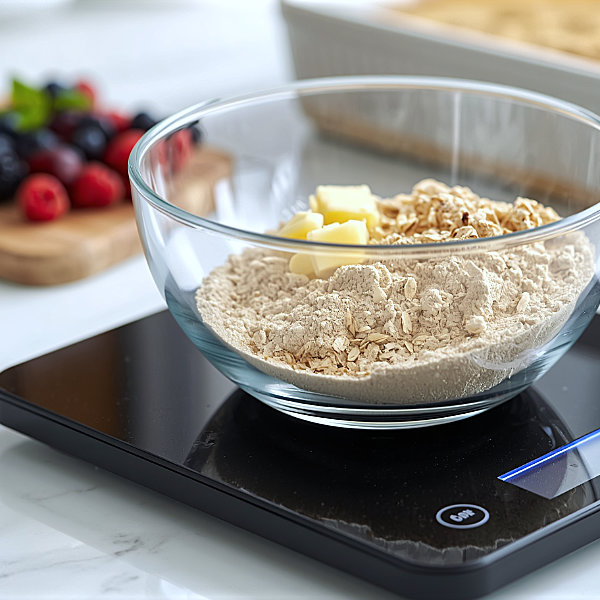
The secret to a crumble topping that bakes up perfectly crisp and buttery—instead of turning into a dense, greasy puddle—is nailing the exact ratio of flour to fat. You simply can’t do that accurately with standard measuring cups.
We rely on the COSORI Digital Kitchen Scale to weigh our ingredients flawlessly every time. It’s hyper-accurate, effortlessly easy to wipe down after a messy baking session, and even calculates nutritional macros, making it an absolute must-have for the freestyle baker.
Prepare the filling before the topping
- Choose the texture. Peel fruit only when the skin would remain tough. Cut firm fruit such as apples or pears into pieces of similar size so they soften together.
- Control the water. If using frozen fruit, keep it frozen and mix it with cornflour just before baking. Thawing first often releases liquid that is difficult to recapture.
- Sweeten by taste, not habit. Tart cooking apples and rhubarb need more sugar than ripe peaches or pears. Mix in half the expected sugar, taste a small safe piece, then add more if needed.
- Add flavour with restraint. Lemon zest, vanilla, cinnamon, ginger or a small pinch of salt can sharpen the fruit. Too many spices make different fillings taste the same.
- Put the filling in the dish and level it without pressing it flat. Leave space below the rim because the juices must bubble before the thickener works.
Make crumbs, not pastry
Rub cold butter into the flour with your fingertips until the mixture contains a range of pieces, from fine crumbs to small flakes. Stir in the sugar afterwards. Those uneven pieces create a craggy surface and give steam somewhere to escape.
Stop as soon as the mixture clumps when squeezed but breaks apart when tapped. If it becomes a smooth dough, the butter is too warm or has been overworked. Chill it for 15 minutes, then break it into rough pieces rather than adding extra flour immediately.
Useful variation: For more bite, replace 40-50 g of the flour with porridge oats or chopped nuts. Good Food’s crumble guidance also treats oats and nuts as texture additions rather than essential ingredients. Keep the total dry ingredients roughly the same so the topping does not become heavy.
Bake until the filling, not just the top, is ready
Scatter the topping loosely over the filling. Do not press it down or seal the edges. Bake at about 180°C conventional or 160°C fan until the top is well browned and the filling is bubbling at the centre as well as the sides. In most medium dishes this takes roughly 35-50 minutes, but a deep dish or frozen fruit can take longer.
Bubbling matters because the filling must become hot enough to release juice and activate the starch. If the top colours too quickly, cover it loosely with foil and continue baking. If the centre has not bubbled, the crumble is not finished.
Rest the dish for 15-20 minutes. This is not merely cooling time: the filling thickens as it stops boiling. Serving immediately often creates the impression that the recipe is too wet.
Match the adjustment to the filling
| Filling | Likely issue | Best adjustment |
| Apples or pears | Pieces can stay firm | Cut evenly; partly cook very hard fruit before topping |
| Berries | A lot of juice | Add cornflour and avoid an over-deep dish |
| Rhubarb | Sharp flavour and released water | Sweeten in stages and pair with apple or strawberry if preferred |
| Stone fruit | Ripe fruit can collapse | Use larger pieces and less added sugar |
| Frozen mixed fruit | Cold centre and delayed thickening | Bake from frozen, allow extra time and check for central bubbling |
Turn the same method into a savoury crumble
For a savoury topping, omit the sugar. Use 200 g flour and 100 g butter, then add up to 50 g grated hard cheese, oats, seeds or chopped nuts. Herbs, black pepper and a little mustard powder can add character, but remember that cheese already brings salt.
The filling should be cooked or nearly cooked before it is topped. A leek and mushroom mixture, for example, should already be tender and coated in a thick sauce. A watery sauce will steam the crumb from below. For meat or fish fillings, follow a tested recipe and make sure the centre is steaming hot throughout.
Fix the problem you actually have
- Watery base: use a wider dish, add an appropriate thickener, bake until the centre bubbles, and rest before serving.
- Greasy or hard topping: use cold block butter, handle it less, and scatter rather than compress the crumbs.
- Powdery topping: the flour has not absorbed enough fat, or the crumbs are too fine. Squeeze a few clusters together before baking.
- Burnt edges and raw centre: the dish is too deep or the oven too hot. Cover the top and give the centre more time.
- Bland filling: add enough acidity and a pinch of salt before simply adding more sugar.
Store leftovers safely
Cool leftovers and refrigerate them within two hours. The Food Standards Agency advises eating properly chilled leftovers within 48 hours or freezing them, and reheating only once until steaming hot throughout. A fruit crumble can also be eaten cold if it was cooked, cooled and stored correctly.
For your next crumble, weigh 200 g flour, 100 g butter and 100 g sugar, then spend your attention on the filling. If its moisture is under control and the centre bubbles before the top burns, the method is working.
External reference links
- Good Food: How to make a crumble
- Good Food: The best crumble toppings
- Food Standards Agency: Cooking food and using leftovers safely
Subscribe for more
Get the latest posts delivered monthly so you never miss an article. Sign up below:


