
How to Make Bar-Quality Cocktails at Home
Make consistently better cocktails at home by learning how to measure, balance, chill and dilute drinks without buying a cupboard full of specialist equipment.
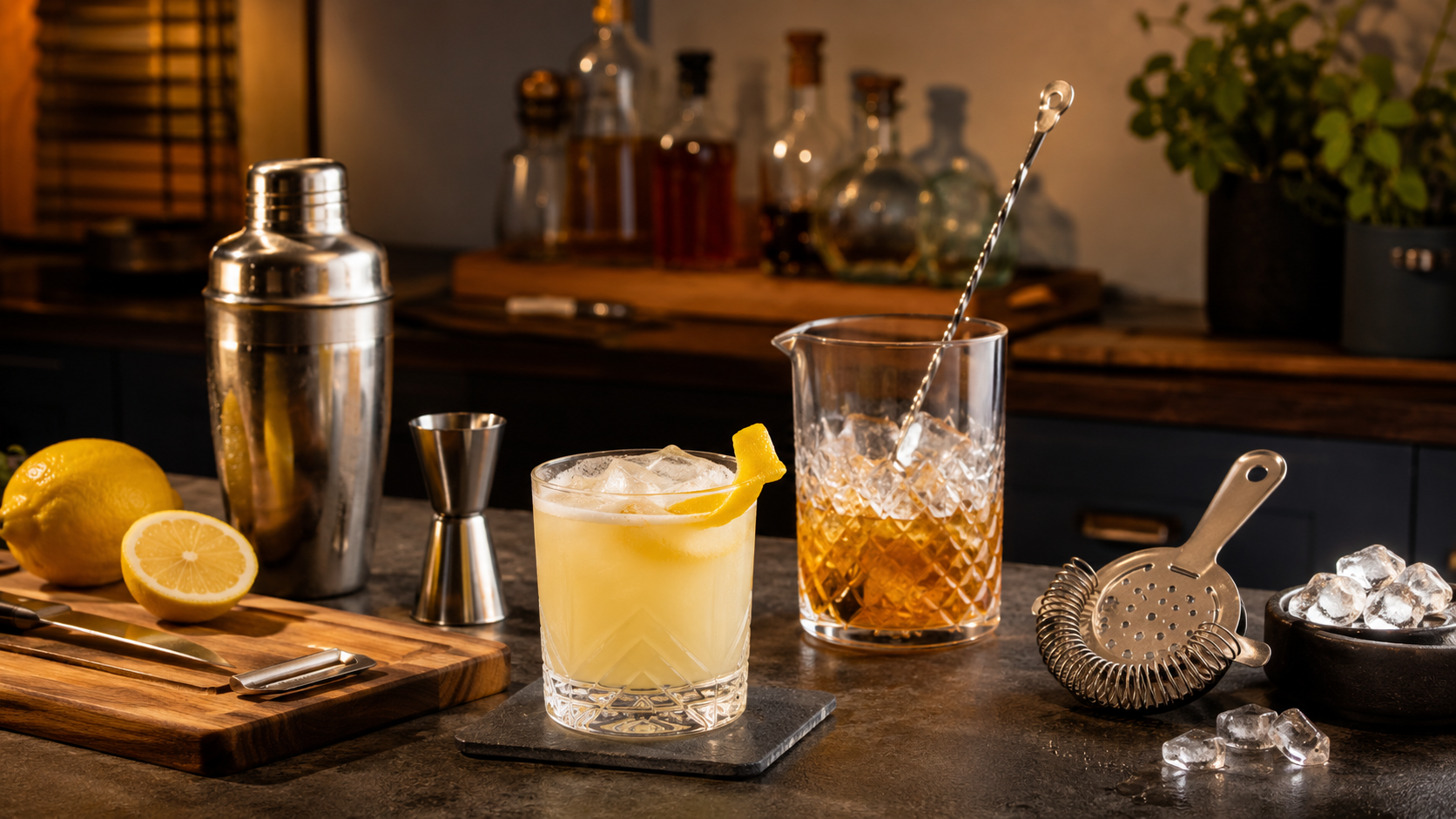
Bar-quality cocktails at home come from measurement, temperature and balance, not a shelf full of bottles. Start with one short menu, measure every ingredient, use plenty of hard ice and taste the result against the recipe. A simple jigger will improve more drinks than a decorative shaker.
The fastest route is to learn one shaken sour and one stirred, spirit-led drink. Together they teach the two main workflows and make it obvious whether a weak result came from the recipe, the ice or the technique.
Please note: The content below may contain affiliate links. If you make a purchase through these links, we could earn a commission, at no additional cost to you.
Buy for a menu, not for a collection
Choose three drinks you genuinely enjoy and list their shared ingredients. A compact starting bar might contain one base spirit, fresh lemon or lime, sugar syrup, soda water and bitters. Add vermouth or a liqueur only when it serves more than one planned drink.
- Base spirit: choose one versatile bottle you already like in simple serves.
- Citrus: buy lemons or limes close to the day of use; bottled juice rarely gives the same fresh aroma.
- Sweetener: make a small batch of equal parts sugar and hot water by weight, cool it and refrigerate it in a clean labelled bottle.
- Lengthener: soda, tonic, ginger beer or sparkling water changes strength and serving style without requiring another spirit.
- Accent: bitters, herbs or a small amount of liqueur should change the drink, not merely decorate the shopping list.
Check storage after opening. Vermouth and other wine-based products deteriorate and are normally best refrigerated; follow the producer’s current instructions. Buying a smaller bottle can be better value if the larger one will sit open for months.
The equipment that earns its space
| Tool | Why it matters | Sensible substitute |
| Jigger or small measure | Keeps strength, sweetness and acidity repeatable | A marked measuring spoon or small kitchen measure |
| Shaker | Chills, dilutes and aerates quickly | A sturdy, well-sealed jar used cautiously |
| Strainer | Holds back broken ice and pulp | A small kitchen sieve |
| Long spoon | Stirs with less aeration | An ordinary teaspoon for a mixing glass |
| Citrus press | Makes fresh juice practical | Hand squeezing through a sieve |
| Good ice tray | Provides enough cold mass for chilling | Bagged ice stored without absorbing freezer odours |
Glassware is secondary. A properly made drink in a clean tumbler is better than a warm drink in the nominally correct glass.
Use a sour template to learn balance
As a starting exercise, shake 50 ml base spirit, 25 ml fresh citrus and 15 ml 1:1 sugar syrup with plenty of ice. Strain and taste. This is a training ratio, not a universal law: sweeter liqueurs, sharper fruit and personal preference all change the final amount of sugar.
- If it tastes sharp and thin, add 5 ml syrup.
- If it tastes sweet and heavy, add 5 ml citrus.
- If it tastes hot or disjointed, the drink may need more chilling and dilution rather than more sugar.
- If it tastes watery, use colder, larger ice and shake for less time; also check whether the ice had already begun melting.
Change one variable at a time and write the final ratio down. Bars achieve consistency because the second drink is made from a specification, not from memory.
The FreshKit.co.uk Repeatable Cocktail Specification
– A reusable cocktail-specification sheet
– Ingredient measurements, ABVs and units
– Technique, ice, garnish and serving details
– Guided taste adjustments
– A repeatability check
– An eight-ingredient UK unit calculator
– Worked example and quick-reference measures
– Batch and per-serving calculations
– Responsible-drinking guidance
Shake some drinks and stir others
Shake when ingredients resist mixing
Citrus, fruit purée, dairy and egg white usually benefit from shaking. Fill the shaker generously with hard ice, seal it, shake until the outside is very cold, then strain promptly. Small, wet ice dilutes quickly and can make the same recipe taste weak.
Stir when clarity and texture matter
Spirit-led drinks made from clear ingredients are commonly stirred. Add ingredients and ice to a mixing glass or jug, stir until thoroughly cold, then strain. The aim is controlled chilling and dilution without the aerated texture of a shaken drink.
Ice is an ingredient
Ice does three jobs: it cools the drink, contributes dilution and changes texture. Use more ice, not less. A vessel full of cold ice generally chills quickly; a few cubes warm and melt before the drink is properly cold.
Taste immediately after straining. If the drink continues to sit over small ice, it will keep diluting. For a long drink, build over fresh ice and add the carbonated mixer last, stirring gently so it stays lively.
Garnish for aroma or function
A garnish should contribute aroma, flavour or information. Expressed lemon peel brings citrus oil to a stirred drink; mint should be fresh enough to smell before the glass reaches the mouth; a lime wheel can signal the juice used. A large garnish that blocks drinking is decoration at the reader’s expense.
Calculate alcohol units instead of guessing
In the UK, one alcohol unit is 10 ml of pure alcohol. The NHS formula is ABV multiplied by volume in millilitres, divided by 1,000. A cocktail containing 50 ml of 40% spirit contains 2 units from that spirit. If it also contains 25 ml of a 20% liqueur, that adds 0.5 units, making 2.5 units before any other alcoholic ingredient.
Use the ABV printed on the actual bottle. UK guidance says that, to keep health risks low, adults who drink most weeks should not regularly exceed 14 units a week; if drinking as much as 14 units, spread it over three or more days and include drink-free days. This is a weekly guideline, not a target or a promise that drinking is risk-free.
Safety boundary: Do not drink and drive. Avoid alcohol if you are pregnant or think you could become pregnant, and check with a pharmacist or clinician if alcohol may interact with medication or a health condition. Do not serve alcohol to anyone under 18.
Handle egg-white drinks safely
For a cocktail using raw egg white, use pasteurised egg or UK hen eggs carrying the British Lion mark or an equivalent assurance mark. The FSA says these assurance-scheme eggs can be eaten raw or lightly cooked by most people, including pregnant people and adults over 65, but this does not apply to severely immunocompromised people on medically supervised diets. An egg-free foaming product or aquafaba can be a practical alternative, provided any allergens are checked.
Offer a deliberate alcohol-free version
A good alcohol-free drink still needs structure. Combine acidity, sweetness, aroma and length: for example, citrus with a measured syrup, chilled tea or fruit infusion, then soda. Do not simply remove the spirit from a cocktail and expect the remaining ingredients to balance themselves.
Your first practice session
Make the same sour three times with small, recorded adjustments, sharing or discarding excess rather than drinking each full serve. Keep the glass, ice and base spirit constant. Once you can explain why the final version tastes better, you have learned the skill that transfers to almost every home cocktail: controlled change.
External reference links
- NHS: Alcohol units and calculation formula
- GOV.UK: UK Chief Medical Officers’ low-risk drinking guidelines
- International Bartenders Association: Official cocktail list
- Food Standards Agency: Egg safety guidance
Subscribe for more
Get the latest posts delivered monthly so you never miss an article. Sign up below:

