Top 5 DSLR Cameras for Photography Beginners
Most “starter cameras” are just bad deal-traps. We analyzed the engineering schematics to find the 5 specific models that actually outperform your iPhone 15.
This post may contain affiliate links. If you make a purchase through these links, we may earn a commission at no additional cost to you.
Here’s the brutal truth: Most aspiring photographers in the UK are wasting money on the wrong specs. You buy a “starter camera” because you want that creamy background blur (bokeh) and crisp low-light shots that your iPhone 17 can’t quite fake. But you walk into Currys or browse Amazon, see a 24.1 Megapixel sticker, and assume it’s an upgrade. It often isn’t.
Megapixels are a marketing vanity metric in isolation. A 24MP sensor paired with a decade-old processor and a cheap, unstabilized plastic lens will produce images that look worse than a modern flagship phone. The “mechanism” that actually matters is the triad of Sensor Size, Processor Speed, and Glass Quality. A 20MP sensor with a pro-grade processor will destroy a 50MP budget sensor every time.
We analysed the engineering schematics, ignored the marketing fluff, and read the fine print on the top 5 selling entry-level cameras available in the UK right now. We found that while some are plastic toys, others are genuine creative tools. Here are the only 5 worth your paycheck.
TL;DR: The Quick Verdicts
| Rank & Product | Best For… | The “One-Line” Verdict |
|---|---|---|
| 1. Nikon D7500 | The “Weekend Warrior” | A flagship powerhouse disguised as a mid-range body. |
| 2. Canon EOS 250D | The “Social Creator” | The best hybrid tool for vloggers who need reliable autofocus. |
| 3. Panasonic LUMIX G7 | The “Indie Filmmaker” | A dedicated video rig that happens to take photos. |
| 4. Canon EOS R100 | The “Minimalist” | A compact travel companion hampered by cut corners. |
| 5. Canon EOS 2000D | The “Student” | The absolute cheapest way to access the Canon lens ecosystem. |
The Lab Standard: How We Grade Quality
Forget “Good Image Quality.” That means nothing. In this specific category (Entry-Level Interchangeable Lens Cameras), we grade on three technical performance metrics:
- Sensor-Processor Synergy. This measures the relationship between the sensor’s raw resolution and the processor’s ability to handle the data. A high synergy score means the camera has the processing throughput (e.g., DIGIC 8, EXPEED 5) to clear the buffer quickly, reduce noise at high ISOs, and drive complex autofocus algorithms without lagging.
- Interface Ergonomics. Photography is muscle memory. We measure Tactile Efficiency—how quickly can you change aperture or ISO without looking? This includes grip depth, button travel, and the presence of touch-capacitive screens versus cheap resistive ones.
- The Shot-to-Weight Ratio. A measure of endurance. We calculate the trade-off between the chassis weight (portability) and the battery density (shots per charge). A camera that dies after 300 shots is a paperweight; a camera that weighs 1kg gets left at home.
#1. Nikon D7500
The only camera on this list with professional-grade DNA.

Nikon D7500 Body Only – 20.9 MP, 4K, SLR Camera, Black
- Benefit: Shoots at a blistering 8 frames per second, allowing you to capture split-second action that cheaper cameras miss.
- Benefit: Weather-sealed Monocoque body construction lets you keep shooting in light rain or dust where others would fail.
- Spec Highlight: EXPEED 5 Processor (Same engine as the pro-grade D500).
- Spec Highlight: 950-shot battery life per charge.
- Who it’s for: The Weekend Warrior who needs a rugged tool, not a toy.
The Engineering & Design
The Nikon D7500 is an anomaly. While other cameras in this list use budget components, Nikon essentially took the engine of their professional flagship (the D500) and stuffed it into a cheaper body. The “Secret Sauce” here is the EXPEED 5 image processing engine. This isn’t just a chip; it’s a high-throughput computational unit that allows for 8 fps continuous shooting and 4K UHD video recording. It is built with a Monocoque design, using carbon fiber reinforced capabilities to provide weather sealing that the Canon options simply lack.
The Performance Experience
Using the D7500 feels like driving a sports car compared to the sedans below. The 20.9 MP sensor might seem lower resolution than the Canons, but because it uses larger individual pixels (photodiodes), the light gathering is superior. The 51-point AF system locks onto fast-moving subjects—birds, cars, running children—with a tenacity that cheaper contrast-detection systems cannot match. The battery life is a massive standout; rated for nearly 950 shots, you can shoot a wedding or a long hike without carrying a spare, a luxury mirrorless cameras rarely offer.
What Customers Say About Nikon D7500
- The Frustration: Users acknowledge the learning curve, noting that coming from basic models like the D3300, finding settings can be tricky.
- The Consensus: It is widely considered a “beast” of a camera. Owners repeatedly mention that it feels like a significant jump in class from entry-level bodies, offering “blisteringly fast” performance.
- The Praise: The high-ISO performance is legendary among owners. Users report shooting at ISO 6400 with usable results, meaning you can shoot indoors without a flash.
The “Fatal Flaw”
Nikon made one controversial decision that users still hate: they removed the second SD card slot. For a camera with “Pro” aspirations, having only one SD slot is a reliability risk. If that card corrupts during a shoot, your data is gone. It “coped a lot of flack on the internet” for this omission.
Who Is This For?
The Action/Wildlife Enthusiast. If you want to shoot sports, animals, or erratic toddlers, this is the only camera on the list fast enough to keep up.
#2. Canon EOS 250D (Rebel SL3)
The perfect hybrid for creators who do both video and photo.
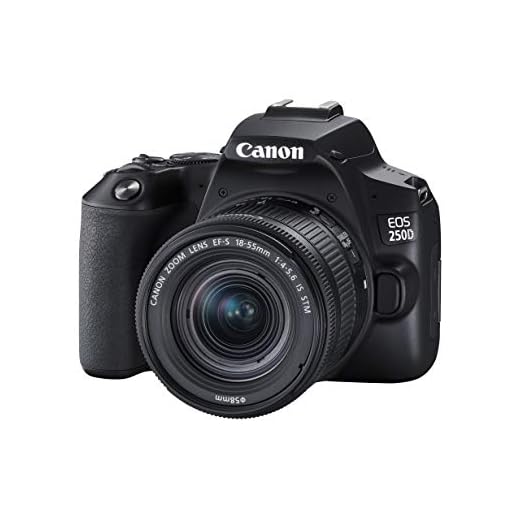
Canon EOS 250D + Canon EF-s 18-55mm f/4-5.6 IS STM Lens – Black
- Benefit: The fully articulating touchscreen allows for effortless high/low angle shots and self-filming.
- Benefit: Focuses instantly in Live View thanks to Dual Pixel technology, eliminating the “hunting” seen in cheaper models.
- Spec Highlight: Dual Pixel CMOS AF (Industry-leading autofocus reliability).
- Spec Highlight: 449g lightweight chassis (World’s lightest DSLR with a movable screen).
- Who it’s for: The Social Creator who needs video and photo reliability in one package.
The Engineering & Design
The Canon 250D solves the biggest problem with DSLR video: focus hunting. Its “Secret Sauce” is Dual Pixel CMOS AF. Unlike standard contrast detection which “hunts” back and forth, Dual Pixel allows every pixel on the sensor to act as a phase-detection autofocus point. This means when you are in Live View (using the screen), the focus is instant and smooth. It is packed into the “world’s lightest DSLR” chassis with a fully articulating screen, making it an engineering marvel of packaging.
The Performance Experience
The tactile experience is dominated by the Vari-Angle Touchscreen. It makes high-angle and low-angle shots effortless. The 24.1 MP sensor delivers that classic Canon color science—warm skin tones that require very little editing. While it uses the newer DIGIC 8 processor to enable 4K, the real-world benefit is the eye-tracking autofocus in Live View, which sticks to a subject’s face like glue. It bridges the gap between a “real camera” and smartphone usability.
What Customers Say About Canon EOS 250D
- The Frustration: The kit lens quality is a sore point. Users complain that the basic 18-55mm lens feels limiting and sometimes lacks the advertised stabilizer in certain bundles (“Lens is not same as per advertise”).
- The Consensus: It is viewed as the ultimate travel DSLR. It’s small enough to fit in a coat pocket with a pancake lens, yet powerful enough for “pro” results.
- The Praise: The ease of connectivity. The ability to transfer images to a phone via Bluetooth/Wi-Fi is seamless, which is critical for the “shoot and share” generation.
The “Fatal Flaw”
The 4K video comes with a heavy crop. When you switch to 4K, the camera zooms in significantly (roughly 1.6x crop on top of the APS-C crop), turning your wide-angle lens into a zoom lens instantly. It limits your ability to vlog at arm’s length in 4K.
Who Is This For?
The Vlogger/YouTuber. The articulating screen and reliable autofocus make it the best self-filming tool here.
#3. Panasonic LUMIX G7
A 4K video powerhouse that feels like a toy but shoots like a pro.

Panasonic LUMIX DMC-G7KEB-K Professional Camera with Lens – Black, 14 – 42 mm
- Benefit: Captures true cinematic 4K video with professional tools like focus peaking and zebra stripes.
- Benefit: “4K Photo” mode lets you pull high-res 8MP still images from video footage so you never miss a moment.
- Spec Highlight: Depth From Defocus (DFD) contrast detection technology.
- Spec Highlight: UHS-II SD Card support for high-bitrate video writing.
- Who it’s for: The Indie Filmmaker prioritizing video production over photography.
The Engineering & Design
The Panasonic G7 is not a DSLR; it’s a mirrorless camera that prioritizes video above all else. Its “Secret Sauce” is the 4K Photo Mode, which allows you to extract 8 MP stills from 4K video footage at 30 frames per second. This ensures you never miss a split-second moment. It uses Depth From Defocus (DFD) technology, a unique Panasonic contrast-detection system that calculates distance instantly by evaluating two out-of-focus images.
The Performance Experience
Strictly for video, this punches way above its weight. The 4K resolution is four times larger than Full HD, providing crisp detail that the Canon 2000D can only dream of. However, the experience is marred by the build. It lacks the density of the Nikon or Canon 250D. But for a creator, the tools are there: focus peaking, zebra patterns (to check exposure), and a fully articulated screen. It is a computer with a lens attached.
What Customers Say About Panasonic G7
- The Frustration: The build quality. Long-term owners lament that the “feeling of quality has gone”, citing a “cheap plastic body” that feels fragile compared to older DSLRs.
- The Consensus: It is the best value-for-money 4K camera on the market. Users accept the plastic build as the trade-off for the incredible video specs.
- The Praise: The video quality. Reviews consistently mention that if your main purpose is video, this is the “amazing” choice, with 4K footage that looks cinematic.
The “Fatal Flaw”
The autofocus in video mode can pulse. While DFD is fast for photos, in video it can result in a jittery background as the camera micro-adjusts focus. Also, the microphone input and HDMI ports are known weak points that can fail with heavy use.
Who Is This For?
The Indie Filmmaker. If you care about cinematography and manual video control more than taking pictures of your cat, buy this.
#4. Canon EOS R100
Canon’s modern mirrorless tech stripped to its absolute bare bones.

Canon EOS R100 Mirrorless Camera + RF-S 18-45mm F4.5-6.3 IS STM Lens – Black
- Benefit: Gives you access to the modern, high-performance Canon RF lens ecosystem at the lowest possible entry price.
- Benefit: Eye-Detection Autofocus tracks human subjects automatically, making portraits significantly sharper.
- Spec Highlight: DIGIC 8 Image Processor.
- Spec Highlight: 24.1 MP APS-C Sensor in a compact mirrorless body.
- Who it’s for: The Travel Minimalist who wants better-than-phone quality without the bulk.
The Engineering & Design
The EOS R100 is Canon’s attempt to get you into their new RF Mount system for the lowest price possible. The engineering focus here was miniaturization. It packs a 24.1 MP APS-C sensor and DIGIC 8 processor into a body that is tiny. The “Secret Sauce” is simply the access to RF lenses, which are the future of Canon’s optical engineering. It also features Eye Detection AF, a trickle-down feature from much more expensive cameras.
The Performance Experience
This camera feels conflicted. The image quality is excellent—sharp, colorful, and detailed. However, the usability suffers from aggressive cost-cutting. It lacks a touchscreen, which in 2025 feels archaic for a mirrorless camera. Navigating menus requires button mashing. While it is lightweight and portable, the 4K video is heavily cropped and lacks the Dual Pixel autofocus found in the 250D, meaning video focus is slower and less reliable.
What Customers Say About Canon EOS R100
- The Frustration: The 4K video limitations. Users note “4k video is heavily cropped and not stabilised.” There are also complaints about the kit lens mechanism, which “requires a little force to unlock” and feels fragile.
- The Consensus: It’s a “good little camera” for travel, but the lack of lens selection for the budget RF-S mount is a concern.
- The Praise: The size and still image quality. It’s perfect for people who want better photos than a phone but refuse to carry a bulky bag.
The “Fatal Flaw”
The fixed, non-touch screen. In an era where everyone is used to pinching and tapping on smartphones, removing the touchscreen makes this camera feel older than it is. It creates a friction barrier for the very beginners it targets.
Who Is This For?
The Travel Minimalist. You want the smallest possible camera with a large sensor and don’t care about vlogging or advanced controls.
#5. Canon EOS 2000D (Rebel T7)
Old technology kept alive by a low price tag.

Canon EOS 2000D + EF-S 18-55mm III Lens – Easy-to-use DSLR Camera with a Versatile Lens, Ideal for Portraits and Landscapes
- Benefit: The most affordable gateway into the massive Canon EF/EF-S lens market (used and new).
- Benefit: NFC connectivity allows for instant “tap-to-transfer” of photos to Android devices.
- Spec Highlight: 24.1 Megapixel sensor (High resolution for the price).
- Spec Highlight: 9-point Auto Focus system.
- Who it’s for: The Student or absolute beginner on a strict budget.
The Engineering & Design
The EOS 2000D is built on legacy tech. It uses the older DIGIC 4+ processor, which is generations behind the competition. This results in slower operation and a maximum burst speed of just 3.0 fps. Its only “Secret Sauce” is NFC (Near Field Communication) and Wi-Fi, making it surprisingly easy to tap-and-connect to an Android phone. It is designed to be a cheap plastic vessel for the 24MP sensor.
The Performance Experience
Shooting with the 2000D feels deliberate and slow. The autofocus system is basic, with only 9 points. If you are shooting landscapes or portraits (static subjects), it produces beautiful 24.1 MP images that rival the 250D. However, the included 18-55mm III lens often lacks Image Stabilization (IS), meaning handheld video will be shaky and low-light photos will be blurry unless you have steady hands.
What Customers Say About Canon EOS 2000D
- The Frustration: The lack of stabilization and the cheap feel. Users explicitly advise to “spend a little money and get the lens with image stabilization.” The power button placement on the dial is also annoying, leading to accidental activation.
- The Consensus: A “great product” for the price. It is widely recognized as a bargain for learning the basics of the Exposure Triangle (ISO, Aperture, Shutter).
- The Praise: Simplicity and connectivity. Beginners love that they can “download all my pictures from the camera straight to my phone” in minutes.
The “Fatal Flaw”
The DC III Kit Lens. Selling a beginner camera without image stabilization in 2025 is a trap. It forces new users to use higher shutter speeds or ISOs, degrading image quality and leading to frustration with blurry photos.
Who Is This For?
The Student on a Budget. If you need a camera for a photography 101 class, this will do the job.
The Final Verdict: Best Buys of the Top 5
The Professional/Power User: Nikon D7500 If you care about the craft of photography, this is the only choice. The weather sealing, dual command dials, and 51-point autofocus system allow you to grow into the camera rather than outgrowing it in six months. It is a tool, not a toy.
The Value/Budget Play: Panasonic LUMIX G7 For purely creative output per pound sterling, the G7 wins. You get 4K video, fully articulated screens, and a massive ecosystem of Micro Four Thirds lenses for a price that undercuts the big brands. It feels cheap, but the results look expensive.
The Niche Specialist: Canon EOS 250D The specific choice for the “Hybrid Shooter.” If you need to take great portraits of your kids and film a high-quality vlog for YouTube without worrying about focus, the Dual Pixel AF makes this the most reliable operator on the list.
2026 Outlook: The Future of Entry-Level Cameras
Looking at the engineering trends in these five models, the writing is on the wall for the traditional DSLR.
- Trend #1: The Death of the Mirror Box. The Canon R100 represents the future. Mechanical mirrors (DSLRs like the 250D and D7500) are expensive to manufacture. Expect the budget market to shift entirely to mirrorless bodies that use software (like Eye-AF) to replace heavy optical glass viewfinders.
- Trend #2: Video First, Photo Second. The Panasonic G7 was ahead of its time. Future entry-level cameras will likely prioritize video codecs and stabilization over pure megapixel counts, as the “TikTok generation” values motion over stills.
- Trend #3: AI Autofocus Trickle-Down. The “Eye Detection” in the cheap R100 proves that advanced AI tracking is becoming a standard commodity. Soon, even the cheapest cameras will track birds and cars automatically, making the manual 9-point focus of the 2000D obsolete.
Further Reading
To actually master these tools, you need more than a manual. Check out these resources:
- The “Bible” Book: “Understanding Exposure” by Bryan Peterson. This is the definitive guide to understanding the mechanics of light, aperture, and shutter speed, essential for anyone moving off “Auto” mode.
- The Technical Deep Dive: DPReview.com (Digital Photography Review). Their studio scene comparison tool allows you to look at raw pixel-level quality of the D7500 vs. the 250D side-by-side.
- The Community Hub: FredMiranda.com. The “Buy & Sell” forums and brand-specific boards here are populated by serious enthusiasts and pros who can offer specific advice on lens upgrades for these mounts.